

Think dealerships won’t budge on price?
They will, if you come prepared.
With the right research, timing, and tactics you can often shave 3 to 7% off a used-car asking price, sometimes more.
This post lays out the simple, repeatable moves that make that happen: market valuation, pre-approved financing, a thorough inspection, negotiating the out-the-door price not monthly payments, separating trade-in talks, and a firm walk-away limit.
Read on to learn the scripts, numbers, and timing that win.
What To Expect When Negotiating Price For A Used Car At A Dealership

Negotiating price for a used car at a dealership is entirely possible, and buyers who prepare properly can realistically secure a price 3 to 7% below asking, sometimes more. This isn’t a myth. And it’s not luck. It’s a repeatable process built on research, timing, and knowing exactly what number you will and won’t accept.
The short answer: research the market value first, get pre-approved financing before you walk in, inspect the vehicle closely, negotiate the full out-the-door price rather than a monthly payment, keep any trade-in conversation separate, and stay willing to walk away if the numbers don’t work. These six moves form the backbone of nearly every successful used car negotiation, and each one strengthens the others. Skip the prep work and you’re negotiating blind. Do the prep work and you walk in with more control than most salespeople expect from a buyer.
Here’s what that looks like in practice, using an $18,500 listing as an example:
- Start with an opening offer around 10 to 15% below asking, roughly $15,700 to $16,650
- Aim for a realistic target price around 3 to 7% below asking, roughly $17,205 to $17,895
- Set a firm ceiling price you won’t exceed, no matter the sales pitch
- Bring documentation (valuation printouts, history reports, comparable listings) to justify your numbers
- Keep financing, trade-in, and add-ons as separate conversations from the price itself
The rest of this guide walks through each of these steps in detail, including the research tools to use, the scripts that work at the table, and the exact fee categories to check before you sign anything.
Why Dealerships Price Used Cars The Way They Do

Dealer pricing isn’t arbitrary, but it’s not fixed either. Most dealerships set their asking price using a mix of market comparables (what similar cars are selling for nearby), reconditioning costs (detailing, minor repairs, new tires), and their intended profit margin. That margin often includes dealer holdback, a percentage of the invoice price manufacturers pay back to dealers after the sale, plus manufacturer incentives tied to moving specific models or trims. None of these numbers show up on the window sticker, but they explain why the same car can be priced differently at two lots just a few miles apart.
This is also where flexibility comes from. Salespeople typically work on commission, and many dealerships set monthly sales quotas that reset at the start of each cycle. A salesperson close to a bonus threshold near the end of the month, or a dealership trying to clear inventory before a new quarter, has real incentive to close a deal even at a lower margin. That’s not a rumor, it’s basic sales math. Understanding this dynamic sets up the timing strategies covered later, since visiting at the right moment can shift the negotiation in your favor before you even say a word.
Preparing To Negotiate At A Dealership: Research And Documentation

Preparation is where most of your negotiating leverage actually comes from. A buyer who walks in with real numbers gets treated differently than one who’s guessing, and dealerships notice the difference immediately.
Before you visit a lot, work through this research checklist:
- Pull fair market value (FMV) estimates from Kelley Blue Book, Edmunds, and NADA for the exact make, model, year, mileage, and trim
- Collect at least 3 comparable local listings within 25 miles and posted in the last 30 days
- Check Craigslist, Facebook Marketplace, Cars.com, AutoTrader, and competing dealer websites for those comparables
- Build a simple spreadsheet with columns for Price, Mileage, Condition, and Notes on each listing
- Note any differences in trim, mileage, or condition that could justify a higher or lower price than your target car
- Calculate your three key negotiating numbers before you ever speak with a salesperson
Those three numbers are your Opening Offer, Target Price, and Ceiling Price. Set the Opening Offer around 10 to 15% below FMV, your Target Price close to FMV itself, and your Ceiling Price at FMV plus a reasonable estimate for fees. For example, if a car’s FMV comes out to $15,000, your Opening Offer might be $12,750, your Target Price close to $15,000, and your Ceiling Price around $15,500 to allow roughly $500 in expected fees.
Bring printouts or screenshots of your valuation research and comparable listings with you. Numbers on a screen are easy to dismiss. Numbers on paper, sitting on the table in front of a salesperson, are much harder to argue with.
Checking Vehicle History And Ordering A Pre-Purchase Inspection
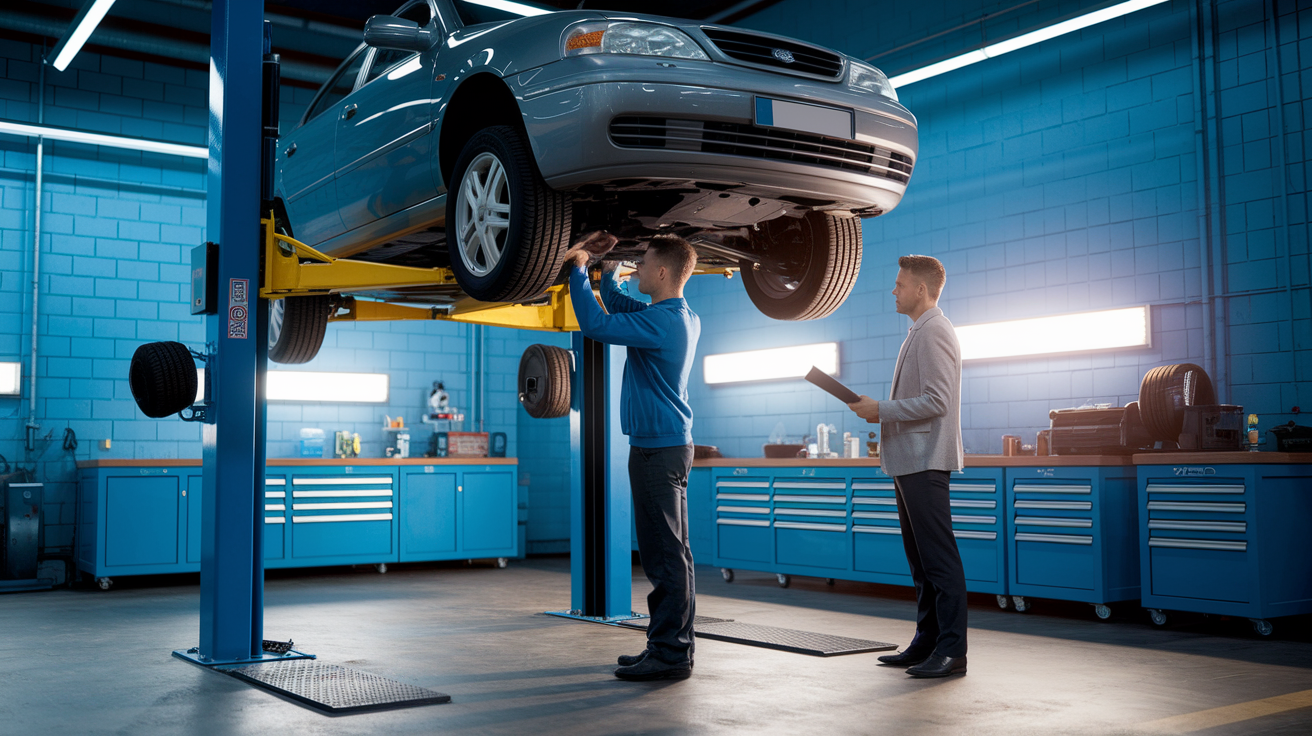
Vehicle history and inspection reports are two of the strongest tools in your negotiation because they turn opinions into evidence. Pull at least two history reports before finalizing any offer. Carfax and AutoCheck each typically cost $30 to $40 and cover accident records, service history, and prior ownership. NMVTIS (National Motor Vehicle Title Information System) costs less, usually $10 to $15, and shows five specific data points worth checking closely: title state and brand, odometer readings, total loss records, salvage history, and junk or dismantle records.
| Report Type | Cost | What It Shows |
|---|---|---|
| Carfax / AutoCheck | $30 to $40 each | Accident history, service records, ownership history |
| NMVTIS | $10 to $15 | Title brand, odometer readings, total loss and salvage records |
| Mechanic Inspection | $100 to $200 | Mechanical condition, needed repairs, safety issues |
Once you have the history reports, request an independent mechanic inspection before you commit to anything. These typically run $100 to $200, and they’re worth every pen
Final Words
You’re in the middle of the deal. Negotiating a used car price at a dealership is doable. Buyers who prepare can often get 3-7% below asking.
Do the homework: check market value, get pre-approved financing, pull history reports, get a mechanic inspection, and negotiate the out-the-door price. Set opening, target, and ceiling prices before you sit down.
Use the checklist here to stay focused. If you follow it, negotiating price for a used car at a dealership becomes repeatable, and you’ll leave the lot confident.
FAQ
Q: What is the $3000 rule for cars?
A: The $3,000 rule for cars is not a formal standard; it’s a loose rule of thumb some buyers use—either as a cap on repair costs or a limit on how much extra to spend. Clarify the context first.
Q: How much can you usually negotiate off a used car?
A: You can usually negotiate about 3–7% off the listed price; start offers 10–15% below asking. Well-prepared buyers with comps and timing can often save several hundred to a few thousand dollars.
Q: How much does a car salesman make on a $10,000 car?
A: A car salesman’s pay on a $10,000 sale depends on commission structure; typical commissions are 20–30% of dealer profit, often yielding roughly $200–$600, though flat fees and bonuses change totals.
Q: What not to say when negotiating for a car?
A: When negotiating for a car, don’t reveal your top budget, say you love the vehicle, focus only on monthly payments, disclose trade-in details early, or admit you urgently need dealer financing.