Featured
How to Spot Flood Damage in a Used Car
By carsonblake
August 12, 2026
Field Notes

Think that bargain used car is a steal? Think again, flood damage hides under clean carpets and can cost you thousands.
This quick, seven-step checklist shows the exact signs to look for, from smells and silt in the trunk to corroded connectors, fogged lights, and VIN red flags, so you can decide fast whether to walk away or book a mechanic.
Follow the steps in order: start with the fast sniff and mat checks, then move to lights, wiring, and paperwork.
Together they reveal the pattern that proves prior flooding.
Seven-Step Used-Car Flood Screening Checklist
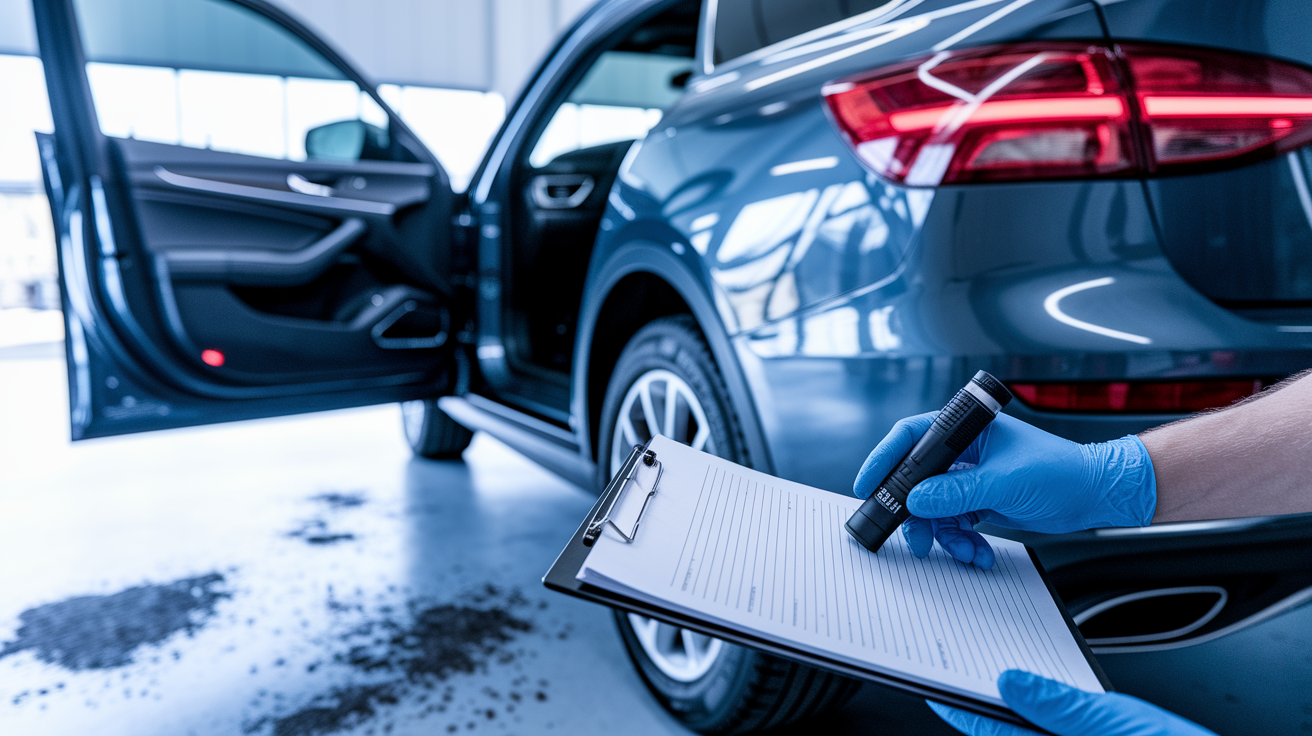
Follow these checks in order, from quickest to confirm to most time-consuming.
- Smell the cabin and air vents for musty odors or strong cover-up fragrances.
- Lift the floor mats and check the carpet seams for dampness, stains, or silt.
- Inspect the trunk and spare-wheel well for sediment, rust, or visible waterlines.
- Test every electrical feature, including the windows, locks, displays, seats, wipers, and climate controls.
- Examine the headlights and taillights for trapped moisture or condensation.
- Check accessible electrical connectors for white or green corrosion and mineral deposits.
- Review the VIN, title, and vehicle-history records for flood, salvage, or unexplained ownership entries.
One musty smell or a single foggy headlight doesn’t confirm anything on its own. But when a musty odor shows up alongside silt in the trunk and corroded connectors under the dash, the odds of prior flood exposure go way up. That’s the pattern you want to watch for. Initial red flags can surface within 2 to 5 minutes of walking around a car, but don’t let a quick look over be your final word.
Don’t buy a car that raises any of these flags until an independent mechanic has completed a full pre-purchase inspection. This checklist helps you decide whether that inspection is worth scheduling. It’s not a replacement for one.
Exterior And Light Clues Of Previous Flood Exposure
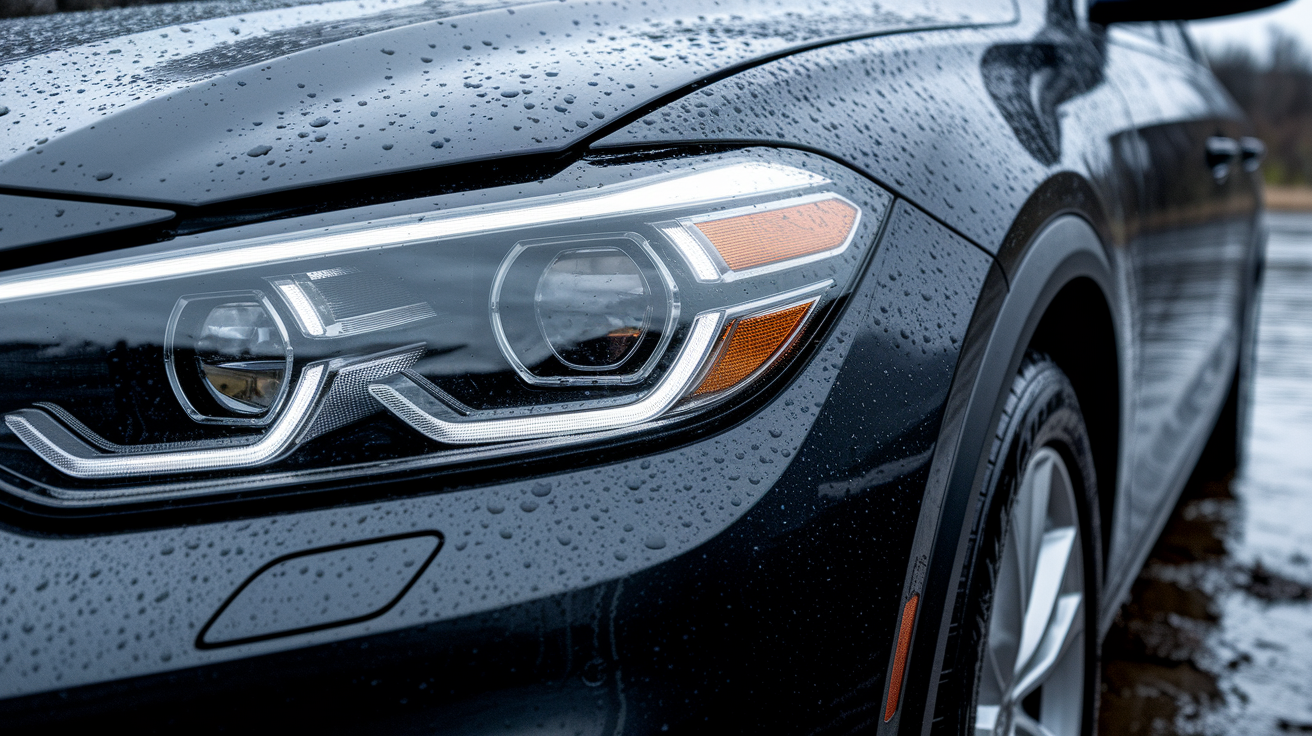
Start your detailed inspection outside the car, the same way you’d naturally walk up to it. Exterior evidence can tell you roughly how high floodwater may have reached and how far it spread into the vehicle’s structure.
- Headlights: look for fogging, condensation droplets, or sediment settled inside the lens housing.
- Taillights: check for the same moisture and cloudiness, especially at the base near the seal.
- Door jambs: run your fingers and eyes along the frame for water marks, rust, or a faint tide line.
- Body panel gaps: check narrow seams around fenders and doors for dried mud or trapped debris.
- Wheel wells: look for fresh undercoating, unusual rust patterns, or packed silt in tight corners.
- Fasteners and metal surfaces: inspect screws, brackets, and exposed metal for pitting or flaking rust that looks out of place on a newer vehicle.
A single fogged headlight can just mean a failed seal, nothing more sinister. That happens on plenty of cars that have never seen a flood. What matters is whether that fogging shows up next to other clues, like rust on fasteners that should still look factory fresh, or mud packed into gaps that a routine car wash wouldn’t reach. Treat isolated condensation as a prompt to look closer, not as proof by itself. Weigh it against what you find in the cabin, trunk, electrical systems, and paperwork before you draw any conclusions.
Visual Evidence Inside The Cabin
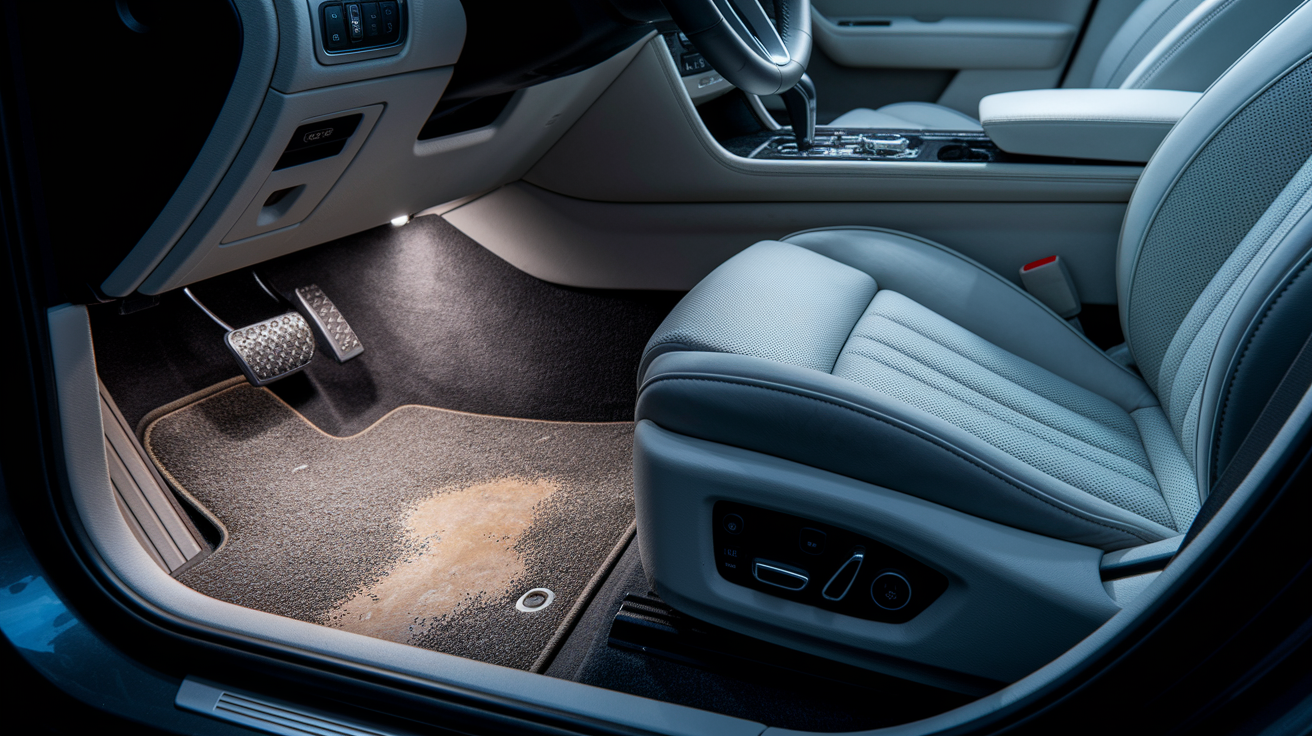
Flood residue tends to hide in the low, easy to miss corners of a cabin, even after a seller has cleaned the visible surfaces. That’s exactly why the inside of the car deserves its own careful pass, separate from a casual glance at the seats.
- Waterlines on door jambs: a faint stain or discoloration sitting 6 to 18 inches above the floor.
- Discolored or warped carpet and upholstery: fabric that looks bleached, stiff, or oddly textured.
- Mismatched or newly replaced carpeting: sections that look newer or a different shade than the rest of the interior.
- Mud or silt beneath seat rails: grit that a vacuum wouldn’t normally reach.
- Raised or separated carpet seams: edges that look lifted, buckled, or glued back down.
- Rust on exposed interior metal: seat tracks, bolts, or brackets showing corrosion.
- Suspiciously clean or recently shampooed carpeting: fresh smelling fibers that seem newer than the rest of the car’s wear.
Lift every floor mat, not just the driver’s side. Get down and inspect beneath the seats with a flashlight, paying close attention to the seat rails and the edges where carpet meets metal. Recently shampooed carpeting can look and smell clean while still hiding water damage underneath, so don’t let fresh fibers put you at ease. One stain by itself might have an innocent explanation, a spilled drink, a leaky sunroof seal. Several related clues showing up together is what should prompt you to dig further before moving on.
The Musty Odor Test For Hidden Moisture
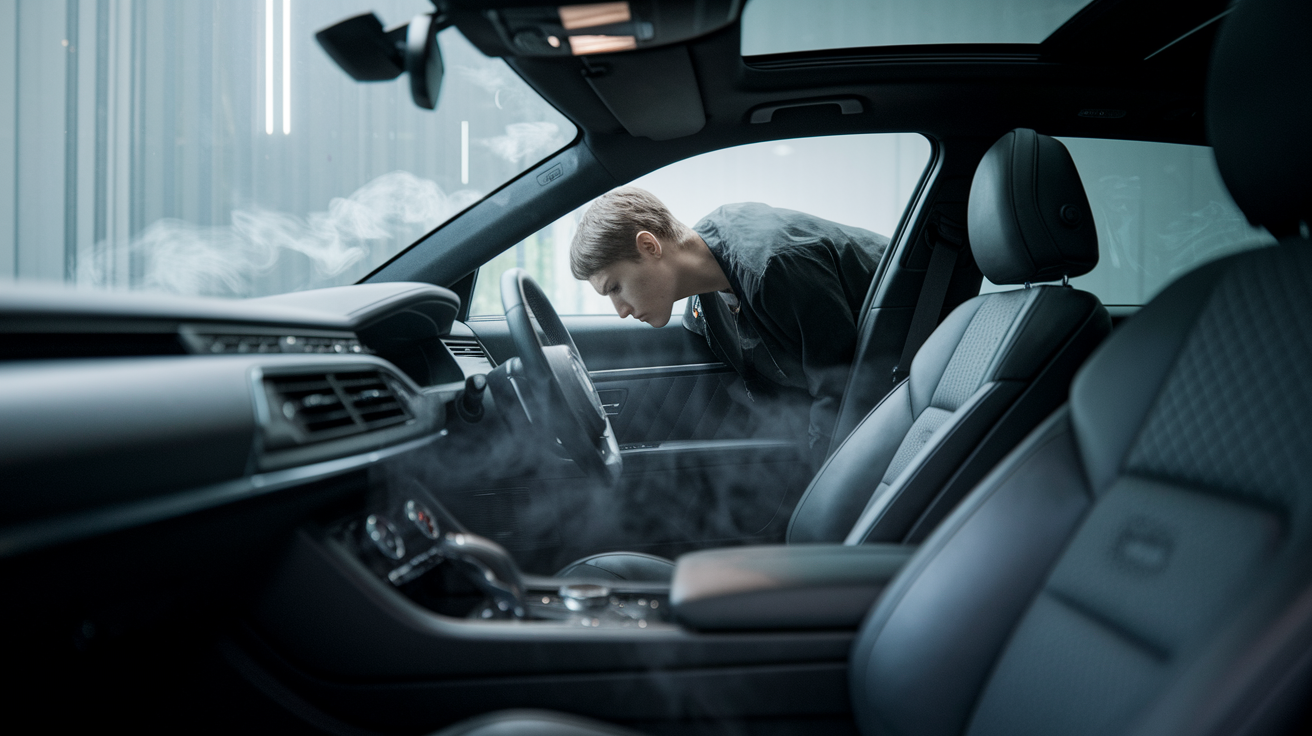
Musty, moldy, or damp smells can develop within 48 to 72 hours after a car has taken on water, and that smell tends to stick around unless someone has properly dried out and treated the affected materials. If a car smells damp the moment you close the door, that’s worth taking seriously.
Strong bleach, cleaning product, or air freshener smells deserve a second look too, though they’re not automatic proof of flooding. Sellers sometimes use heavy cleaning or air fresheners for perfectly normal reasons, like getting rid of smoke smell or pet odor. Still, an overpowering chemical smell in a used car is a signal to dig deeper rather than something to wave off.
Here’s a simple sequence to run through. Close the doors and windows, sit inside for a minute, and just breathe. Then get low and smell close to the carpet seams and underneath the seats, where odors often concentrate. Finally, turn on the fan, heater, and air conditioning across a few different settings and smell the air coming through the vents. A musty smell from the HVAC system in particular can point to moisture that reached deeper into the car than a quick cabin wipe down would fix.
Flood Residue In The Trunk And Spare Wheel Well
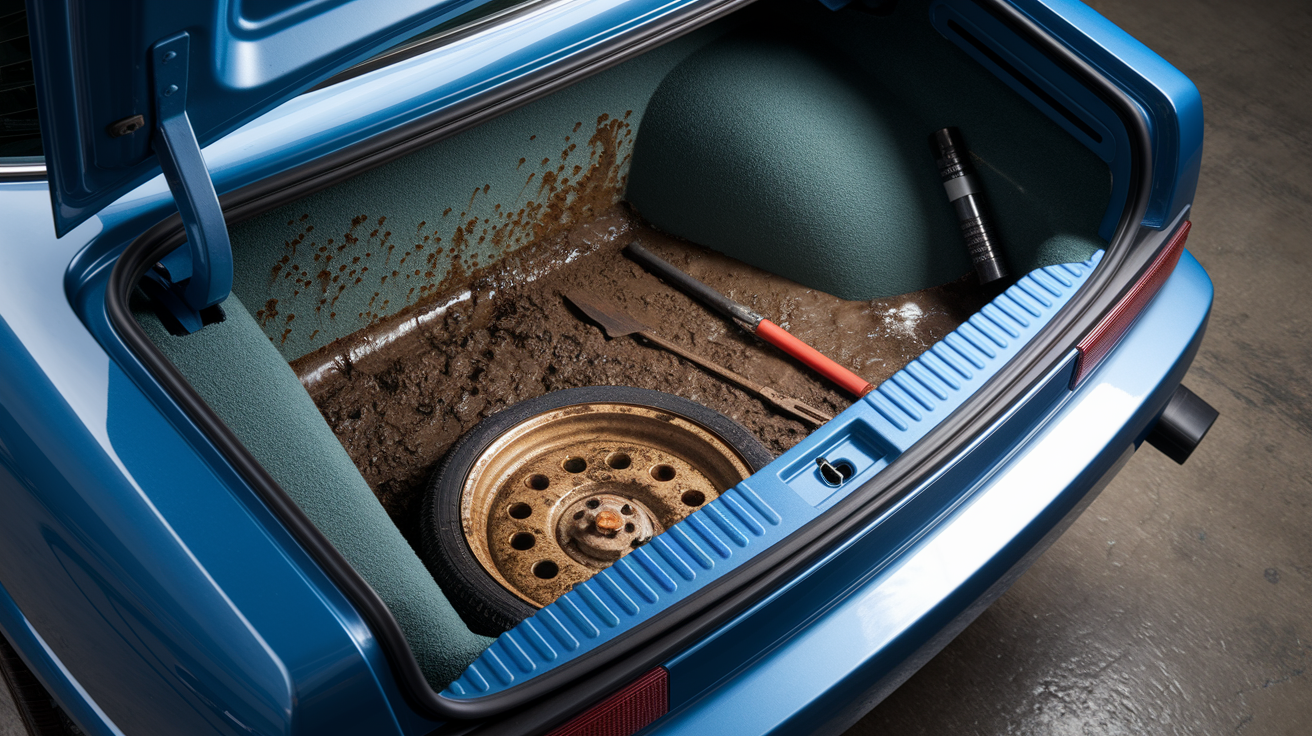
The trunk gets far less attention from sellers doing a quick clean up, which makes it one of the more reliable places to find leftover evidence. The floor, side lining, tool compartments, and spare wheel well can all retain silt, corrosion, or dampness long after the passenger cabin looks spotless.
- Remove the trunk mat and check the floor
Final Words
Run the seven-step screening now: check exterior lights and fasteners, lift mats for waterlines and silt, smell for mustiness, inspect the trunk and spare well, test electronics, review the VIN and title, then get a mechanic’s inspection.
Seeing several clues together, such as musty odour, silt, and corroded connectors, greatly increases the likelihood of prior flooding and raises the risk of electrical failures, mould, corrosion, and insurance or resale problems.
Don’t buy until an independent pre-purchase inspection clears the car. Use this checklist to learn how to spot flood damage in a used car and make a safer choice.
FAQ
Q: Will flood damage show up on Carfax?
A: Flood damage will show on Carfax only if the flood was reported to insurers, auctions, or the title was branded salvage/flood; many flood exposures go unreported, so a clean report isn’t proof of no flood history.
Q: Can a car recover from flood damage? Is it bad to buy a car with flood damage?
A: A car can sometimes recover from flood damage, but buying one is risky: hidden corrosion, electrical failures, mould, and insurance or financing limits often make repairs costly and reduce long-term reliability.
Q: How long does it take for a flooded car to dry out?
A: A flooded car can start to smell within 48–72 hours; visible drying may take days, but trapped moisture in padding, seams, and electronics can take weeks or longer and may need professional remediation.