

Is the auto industry collapsing or reinventing itself?
A SWOT analysis automotive industry cuts past the headlines: established brands and global scale sit beside heavy legacy costs and supplier dependence, while electric vehicles and autonomy offer big growth but require new skills and large investment.
This intro maps what matters—strengths that protect margins, weaknesses that drain cash, opportunities that can lift companies, and threats that can derail plans.
Read on to learn the key strategic takeaways and the first steps you should take.
Automotive Industry SWOT Analysis At A Glance
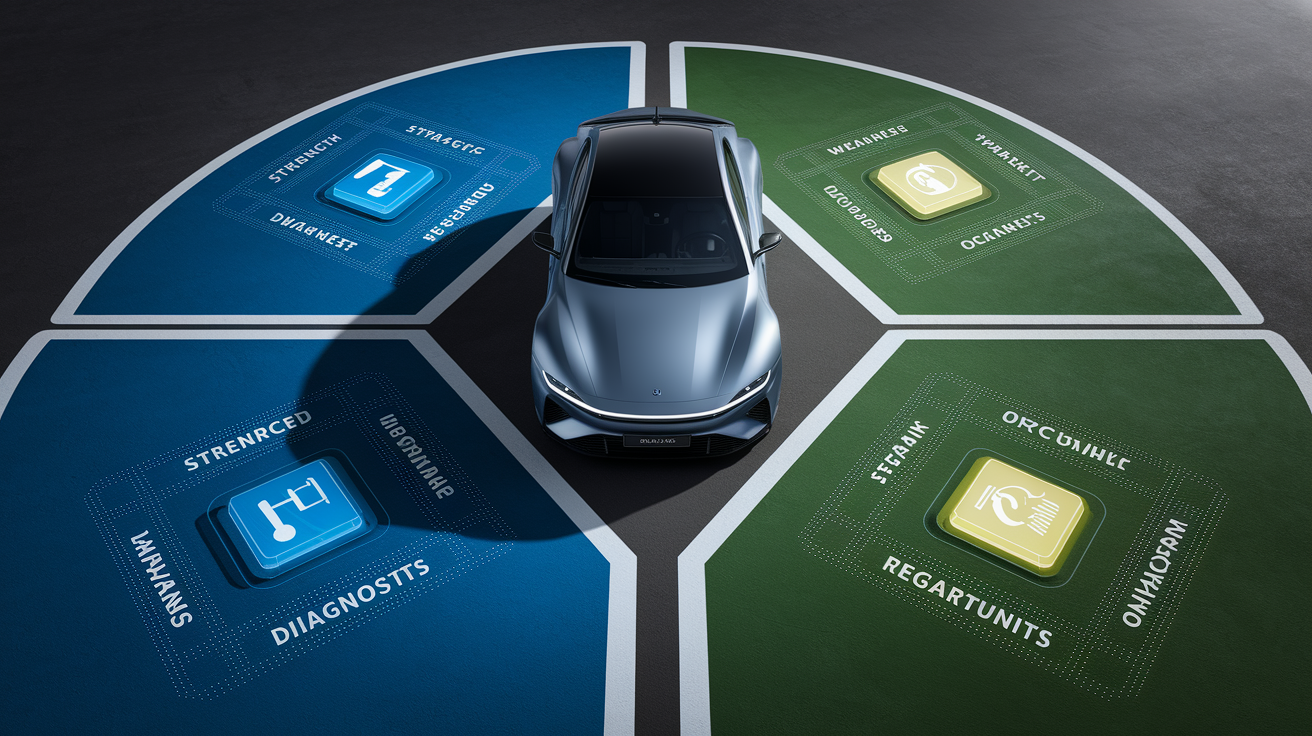
| Strengths | Weaknesses | Opportunities | Threats |
|---|---|---|---|
| Brand equity, global scale, dealer networks, R&D investment | Capital intensity, recalls, legacy ICE assets, supplier dependence | EV growth, autonomy, emerging markets, policy incentives | Regulation, raw material volatility, new entrants, geopolitical disruption |
A SWOT analysis (Strengths, Weaknesses, Opportunities, Threats) is a strategic planning tool that sorts internal advantages and gaps against external chances and dangers. In the automotive industry, that means looking at what a company or the sector does well (established R&D programs, say), where it’s exposed (heavy capital costs), where it can grow (electric vehicles), and what could knock it off course (new emissions rules).
Each quadrant tells its own story. Strengths might be a manufacturer’s decades old dealer network. Weaknesses could be a costly recall that dents customer trust. Opportunities show up in the electric vehicle boom and expanding middle classes in emerging markets. Threats include everything from lithium price swings to a new low cost competitor entering the market overnight.
This framework works at two levels. You can apply it to the entire automotive industry, projected to serve 1.2 billion vehicles on the road by 2030, or zoom in on a single automaker like Tesla, Toyota, or Volkswagen. The commercial vehicle segment alone was valued at $1.35 trillion in 2022, which says a lot about what’s at stake across both passenger and commercial categories.
Businesses use this kind of analysis for product planning and capital allocation. Investors use it to size up risk before putting money into a stock. Academic researchers use it to study industry shifts over time. And competitive intelligence teams use it to track what rivals are doing well, and where they’re vulnerable.
Methodology Behind Building An Automotive SWOT Analysis

Internal factors, strengths and weaknesses, are things a company controls directly, like its manufacturing footprint or R&D budget. External factors, opportunities and threats, come from outside forces like government regulation or shifting consumer habits. Keeping these separate matters because fixing an internal issue takes a completely different approach than responding to something external.
Building a real SWOT analysis takes more than a brainstorm session. It starts with gathering data from market research reports, sales figures, and supplier intelligence to see where the numbers actually point. From there, cross functional workshops bring in voices from engineering, finance, sales, and operations, since each department spots different risks and openings that others might miss.
Once you’ve got a long list of possible strengths, weaknesses, opportunities, and threats, the real work begins: scoring each item by impact versus feasibility. A weakness might be significant but too costly to fix right now. An opportunity might be huge but require capabilities the company doesn’t have yet. This scoring step is what separates the noise from what actually deserves a place in the strategy.
Vertical integration (owning more of your supply chain instead of relying on outside vendors) is one lens worth applying here. Tesla’s approach, building battery cells and software in house, differs sharply from automakers that lean on supplier partnerships and shared platforms. Companies with heavier R&D spending tend to have more room to pursue vertical integration, while lower spending competitors often stick with partnership models to keep costs in check.
A typical SWOT building process follows four steps:
- Data collection from sales trends, market reports, and supplier feedback
- Cross functional input from engineering, finance, and operations teams
- Scoring and prioritization based on impact versus feasibility
- Translating findings into an actionable strategy with clear owners and timelines
Strengths Of Car Manufacturers In The Automotive Industry SWOT
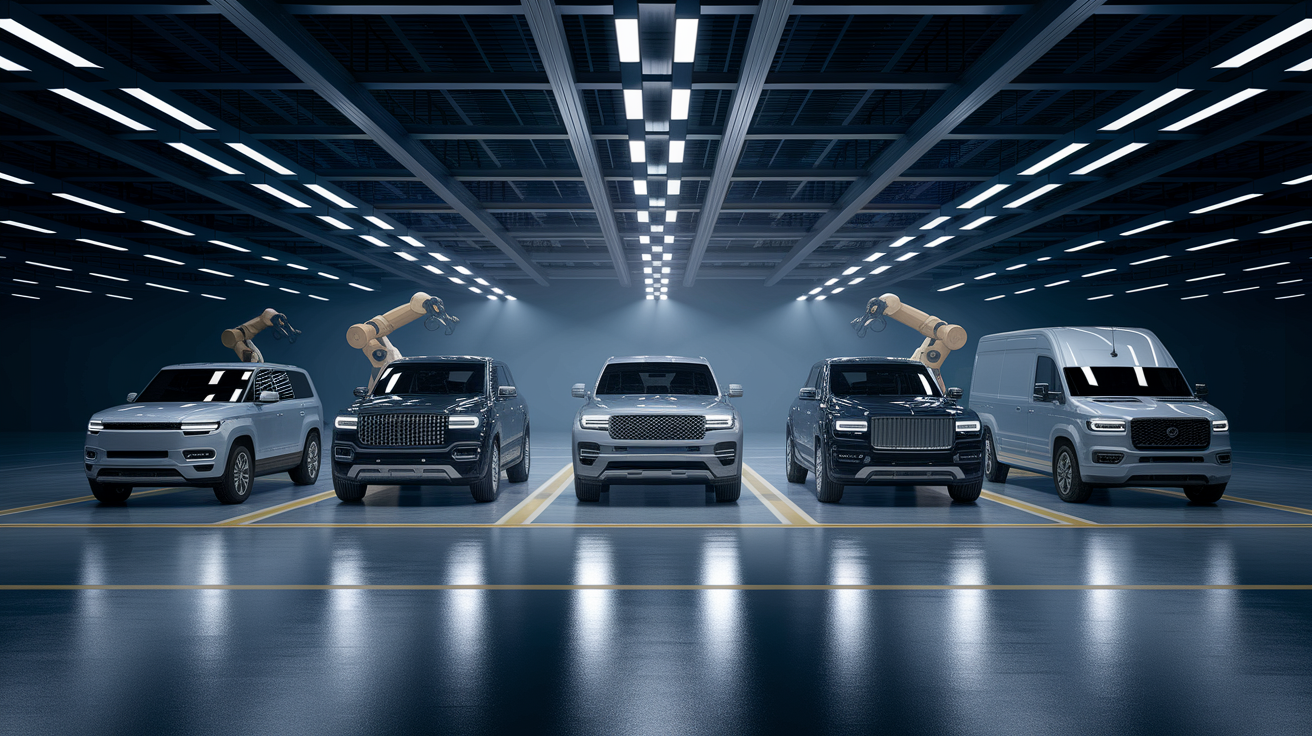
Scale and brand equity give established automakers an edge that’s hard for newcomers to replicate overnight. Decades of manufacturing experience, recognizable nameplates, and global distribution networks add up to real pricing power and customer loyalty.
Here are five strengths that show up consistently across the sector:
- Strong R&D investment: Ford spent roughly $7.6 billion on R&D in fiscal year 2021, while Volkswagen invested about $15.6 billion, funding advances in EVs, hydrogen tech, AI, and blockchain applications.
- Luxury segment resilience: The Veblen effect (where demand rises alongside price because exclusivity itself is the appeal) helps luxury brands stay profitable even in soft markets. One super luxury automaker reportedly sold out its entire 2023 allocation for the Indian market within the first month.
- Established global brand equity: Names like Toyota, Ford, and Volkswagen carry decades of trust, translating into steady repeat purchases and economies of scale that smaller competitors just can’t match.
- Broad product portfolio diversification: Spanning compact cars, SUVs, trucks, luxury vehicles, and commercial fleets lets manufacturers spread risk and capture multiple customer segments at once.
- Established distribution and dealer networks: Physical dealership infrastructure built over decades supports financing, servicing, and trust in a way pure online sales models still struggle to replicate.
These strengths don’t just sit there looking good on paper. Big R&D budgets and portfolio range give manufacturers the flexibility to price differently across segments, protecting margins in the mass market while still capturing premium buyers. A company with both a budget SUV lineup and a luxury sedan brand can absorb a downturn in one segment because the other keeps generating cash. That kind of built in balance is exactly why scale and brand equity remain the foundation strengths in almost every automotive SWOT.
Weaknesses In The Automotive Supply Chain And Cost Structure
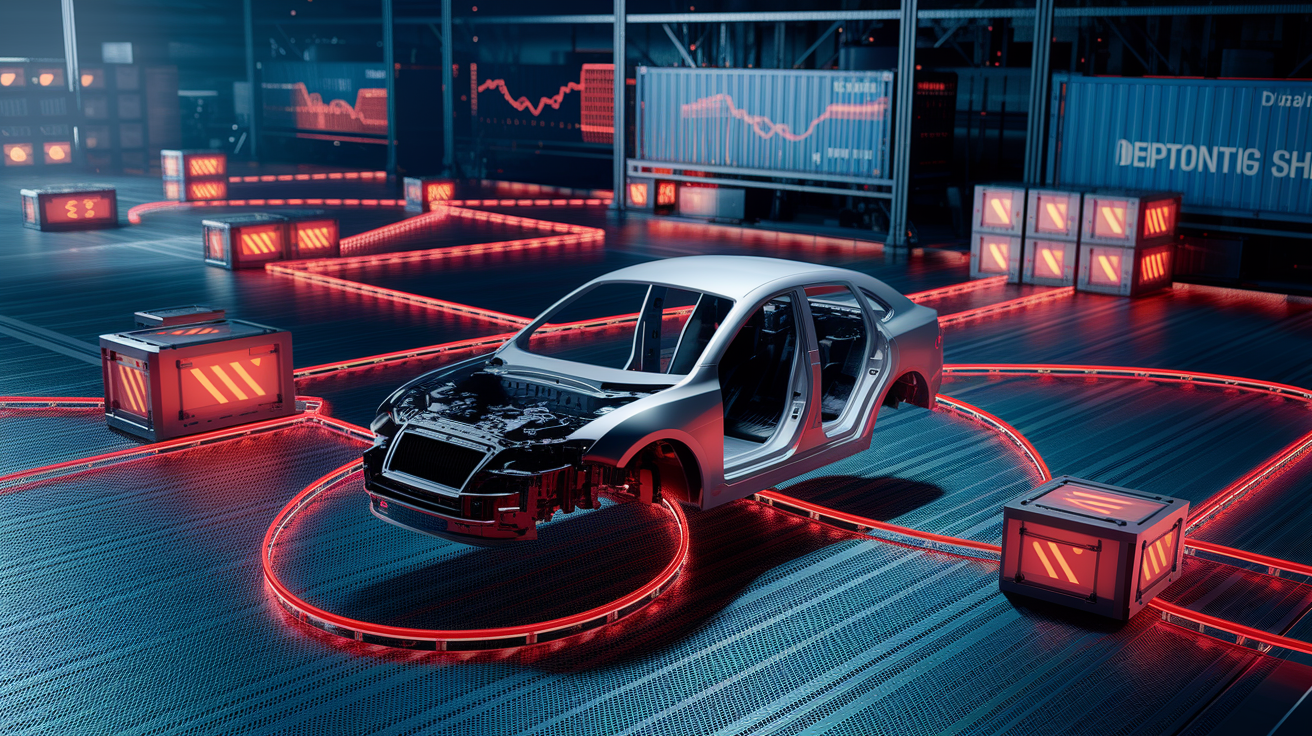
The same scale that gives automakers strength also cre
Final Words
You now have a compact, four-quadrant snapshot that applies SWOT to the automotive sector—strengths like brand and R&D, weaknesses like capital intensity and legacy ICE assets, opportunities in EVs and autonomy, and threats from regulation and raw-material swings.
This matters because the swot analysis automotive industry helps planners, investors, and researchers turn data into clear choices and trade-offs.
Next: score and prioritize the items for your context, then turn the top actions into projects. Solid framework, clearer decisions, better outcomes ahead.
FAQ
Q: What are the strengths and weaknesses of the automobile industry?
A: The automobile industry’s strengths include brand equity, scale, dealer networks, and R&D; weaknesses include capital intensity, legacy ICE exposure, supplier dependence, recall risk, and complex working-capital needs.
Q: What are 5 examples of strengths in SWOT analysis?
A: Five examples of strengths in SWOT analysis are strong brand recognition, proprietary technology or patents, economies of scale, robust distribution/dealer networks, and healthy financial reserves or cash flow.
Q: What are 5 examples of weaknesses in SWOT analysis?
A: Five examples of weaknesses in SWOT analysis are high capital intensity or debt, outdated technology or legacy systems, supplier or single-source dependence, quality/recall exposure, and a narrow or aging product portfolio.
Q: What is Toyota’s biggest weakness?
A: Toyota’s biggest weakness is its relative lag in large-scale battery-electric vehicle rollout versus fast-moving BEV rivals, risking share in EV-focused markets due to heavy bets on hybrids and hydrogen strategies.