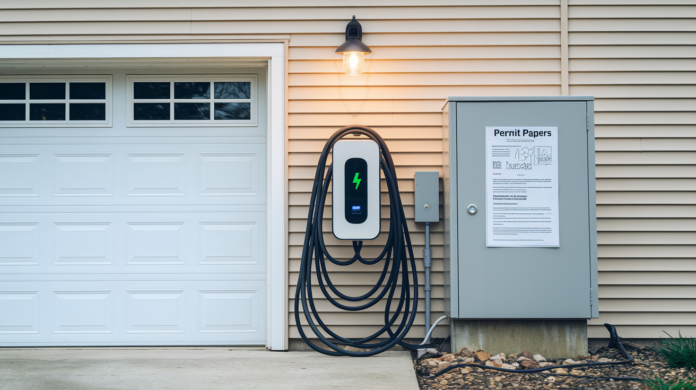

Think installing a home EV charger is a cheap DIY weekend job?
Not so fast. Permits, panel upgrades, and inspections can turn a quick plug-in into a $850 to $5,000+ project.
This post explains which permits you’ll likely need, how permit fees and labor typically break down, and when you must hire a licensed electrician.
We’ll walk you through the four steps from assessment to inspection, point out common cost traps, and give simple next steps so you can get fair quotes and avoid surprises.
Complete Process Overview: Permits, Steps, and Costs for Home EV Charger Installation
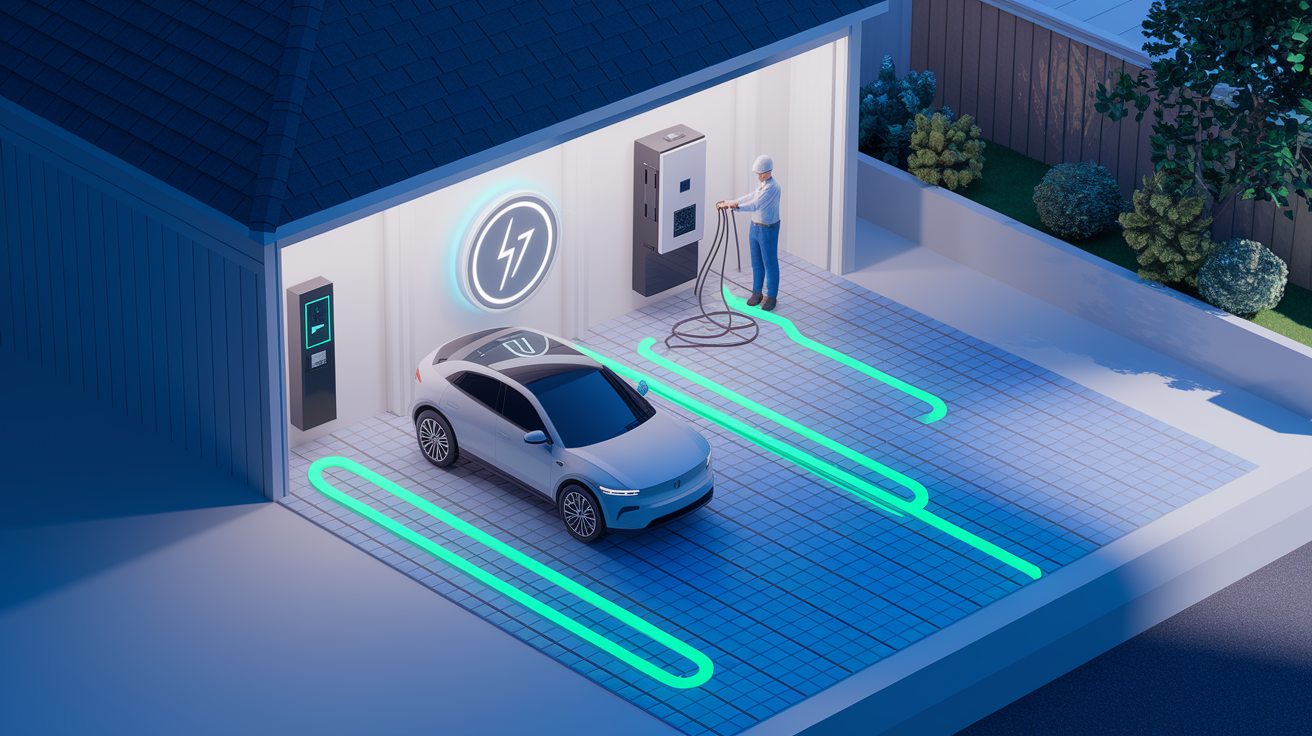
Installing a home EV charger comes down to four stages: assessment, permitting, installation, and inspection. Total costs usually land somewhere between $850 and $5,000 plus, depending on how much electrical work your home actually needs.
Here’s the whole journey, start to finish:
- Assess your electrical panel and parking location. Check whether your panel has the capacity and physical space for a new 240V circuit, then figure out where the charger will sit relative to where you park.
- Choose a Level 1 or Level 2 charger. Level 1 plugs into a standard outlet but charges slowly. Level 2 needs a 240V circuit and charges much faster, which is why most homeowners end up going this route.
- Apply for an electrical permit through your local building department. This step confirms your planned circuit meets National Electrical Code (NEC) rules and local code requirements before any wiring begins.
- Hire a licensed electrician for installation. A qualified electrician runs the circuit, installs the outlet or hardwires the charger, and handles labeling and overcurrent protection the right way.
- Schedule and pass final inspection. The local building department checks that the completed work matches the approved permit before you’re cleared to use the charger.
Permit requirements and costs vary quite a bit from city to city, so what’s true for your neighbor across town might not apply to you at all. The sections below break down each stage in more detail, starting with the permit question that trips up most homeowners first.
Do You Need a Permit for Your EV Charger Installation?
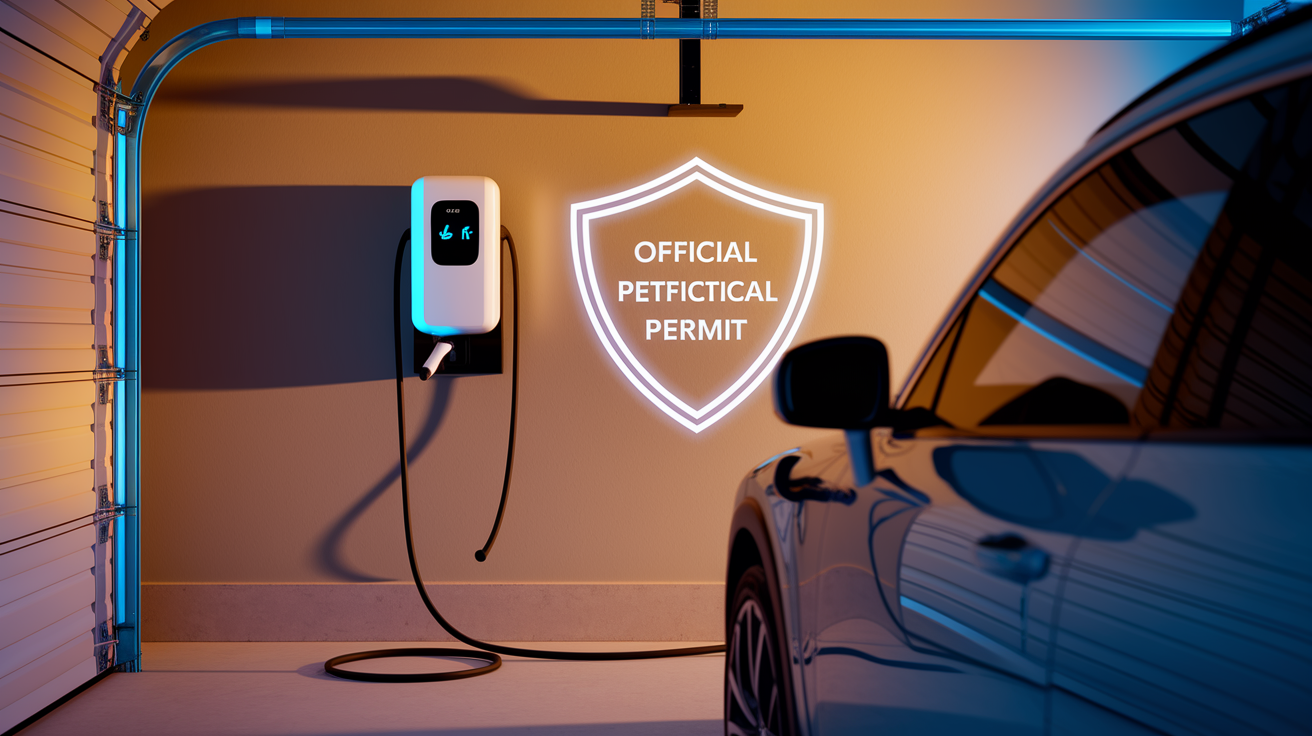
Most cities require an electrical permit for any new EV charging circuit. Makes sense once you know why. A permit confirms the work follows NEC 625 (the code section covering residential EV charging) plus your local building rules. There’s one common exception worth knowing about, though. If your home already has a properly grounded, commercial-grade NEMA 14-50 outlet (a 240V, 50A receptacle often used for RVs or large appliances), you might be able to plug in a Level 2 charger without pulling a new permit at all. Worth checking before you assume you need one. Separately, if installing the charger means modifying your garage or parking structure, say adding new framing or altering the roofline, you may need a building permit on top of the electrical one.
Skipping the permit might seem like a shortcut, but it comes with real risk. Unpermitted electrical work can void your homeowner insurance coverage entirely, which matters a lot if that wiring ever causes a fire or damage claim. It can also complicate things when you sell your home, since buyers and inspectors often ask for permit documentation on any electrical upgrades. A permit creates a paper trail too, naming the responsible contractor, so if something goes wrong, there’s a clear record of who did the work. And if you live in a condo or under an HOA, add another layer to this whole process. Many HOAs require their own approval before you can even file for a municipal permit, so check with your association first to avoid delays.
How to Apply for an EV Charger Electrical Permit
The permit process is fairly simple on paper, but how long it takes can swing a lot depending on where you live. Some cities turn around approvals in a day or two. Others take weeks.
Here’s what the typical process looks like:
- Complete the electrical permit application with your local building department. You can do this yourself, or the electrician you hire can handle it.
- Submit supporting documents, including a site plan, panel specifications, and details about the new circuit you’re installing.
- Wait for plan review, where the department checks that everything complies with NEC and local code requirements.
- Receive approval before any work begins. Starting work before approval can create problems down the line, even if the installation itself turns out fine.
- Schedule the final inspection once the installation is complete, so the department can confirm everything matches what was approved.
Quick note here. Some utility companies require notification, or even a dedicated meter, for EV charging circuits, so it’s worth checking with your utility provider early rather than after installation. Most homeowners hire a licensed electrician not just for the wiring itself, but because the electrician typically handles this entire application and inspection process for you. That’s one less thing on your plate.
Home EV Charger Cost Breakdown: Equipment, Labor, and Permits
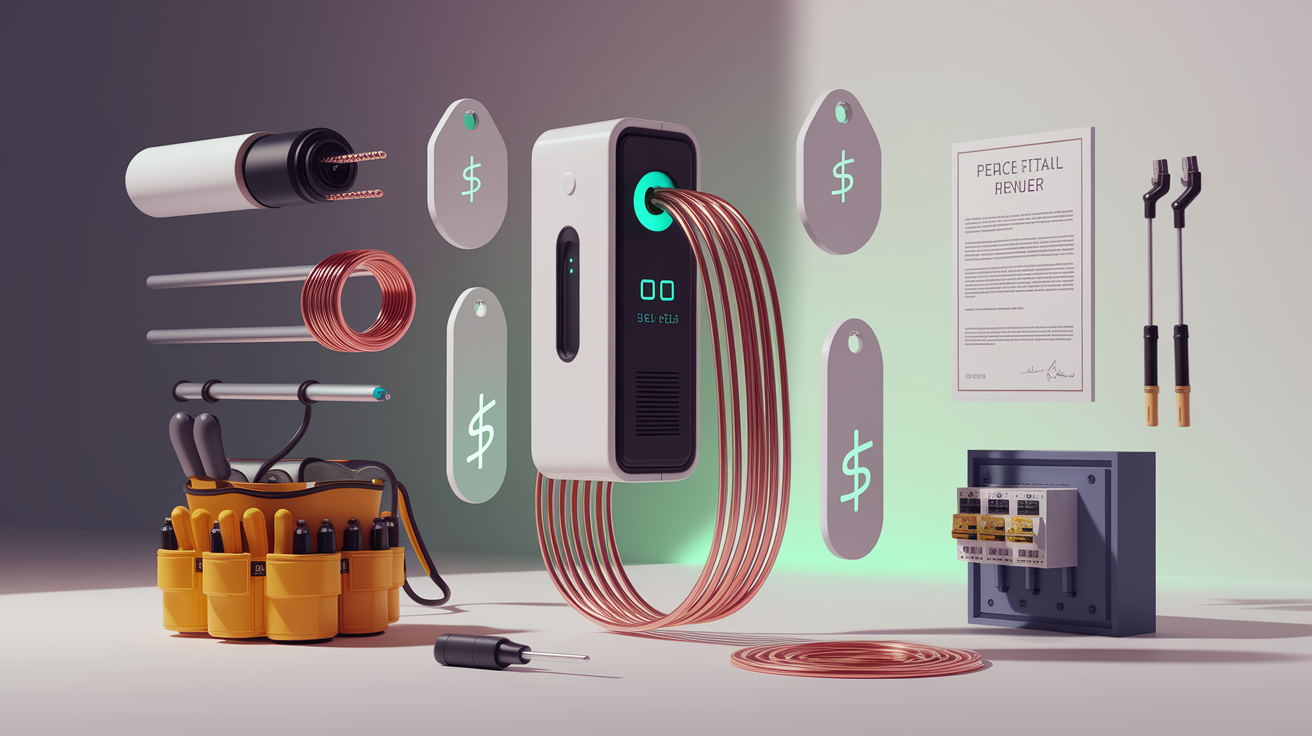
Your total cost comes down to four line items: the charger hardware, the electrical materials, the labor to install it, and the permit fee. Knowing each piece separately makes it a lot easier to spot a fair quote versus an inflated one.
| Cost Item | Typical Range |
|---|---|
| Charger (EVSE) unit | $300 to $1,000 |
| Electrical materials (outlet, wire, breaker, conduit) | $200 to $800 |
| Electrician labor | $300 to $1,500 |
| Permit fees | $50 to $500 (commonly around $150) |
| Total basic installation | $850 to $2,700 |
A quick word of caution on the charger itself. You’ll sometimes find uncertified units for around $200, but skipping certification (look for UL listing) isn’t worth the savings given the amperage running through these circuits. Certified Level 2 chargers generally run $300 to $700.
Costs climb well past that basic range, often past $5,000, when your project needs a panel upgrade, trenching for an outdoor run, or long cable distances from the panel to the parking spot. These add-ons aren’t optional extras. They’re often the difference between a straightforward afternoon install and a multi-day project. Getting at least three itemized quotes, broken down by labor and materials separately, is the best way to catch inflated pricing before you commit to a contractor.
Final Words
Install a home EV charger in four core stages: assessment, permitting, installation, and inspection. Expect $850 for a basic Level 2 install, and $5,000 or more if you need panel upgrades, trenching, or long wire runs.
Most cities require an electrical permit for a new 240V circuit, and permits protect your insurance and resale value. A licensed electrician usually handles the permit application, wiring, and final inspection.
Use the five-step checklist to get panel specs, apply for permits, and collect itemized quotes. This quick wrap-up on how to install a home ev charger: permits and costs gives you a clear path, so start with an assessment and one solid bid.
FAQ
Q: Do I need a permit to install EV charger at home in California?
A: You need a permit in California for most new home EV charging circuits; exceptions exist for an already installed commercial-grade 240V NEMA 14-50 outlet. Structural garage changes may need a building permit.
Q: How much does it cost to install an EV charger in a home?
A: Installing a home EV charger typically costs $850–$2,700 for a basic Level 2 job; complex installs with panel upgrades, trenching, or long runs can exceed $5,000. Hardware, labor, materials, and permit fees vary.
Q: Can a homeowner pull his own electrical permit?
A: A homeowner can sometimes pull their own electrical permit, but rules vary by city; many homeowners still hire a licensed electrician who files the permit, performs work, and signs off for code compliance and inspection.
Q: Does a home EV charger increase my bill?
A: A home EV charger increases your electricity use and bill based on miles driven, charging frequency, and your kWh rate; Level 2 charges faster but cost per kWh is the same—use off-peak rates or smart charging to save.