Reviews
Adaptive Cruise Control: Smart Sensors Track Traffic Seamlessly
By derekthornton
July 11, 2026
Field Notes

What if your car could read traffic like a human and react before you lift your foot off the pedal?
Adaptive cruise control (ACC) does exactly that by constantly scanning the road, fusing radar, camera, and sometimes lidar data, then tracking the lead vehicle and adjusting throttle or brakes.
This post breaks down how ACC detects and responds to traffic in a five-step loop: sense, classify, track, decide, act, so you’ll know which sensors do which jobs, when the system can fail, and what to watch for as a driver.
The Five-Step ACC Operating Cycle
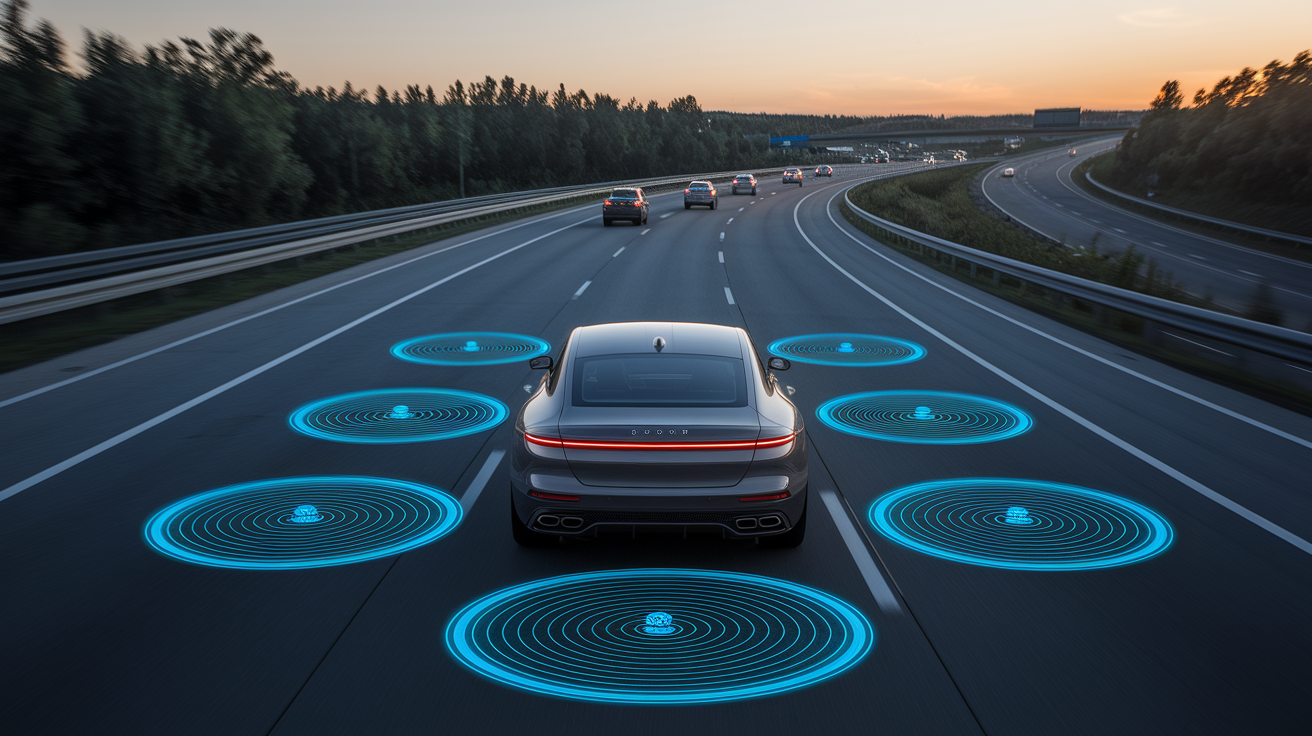
At its core, adaptive cruise control (ACC) scans the road ahead, combines everything it observes, identifies the relevant lead vehicle, checks its distance and relative motion, and adjusts throttle or braking to hold the following gap or cruising speed you selected. Think of it as a constant loop of watching, deciding, and reacting, running in the background so you don’t have to.
This ACC operating cycle is what separates it from old fashioned cruise control. It’s not just holding one speed. It’s actively managing your position relative to traffic, second by second, without you touching the pedals.
Here’s the traffic response process broken into its five basic steps.
- Sense traffic and road conditions.
- Classify detected objects.
- Track the lead vehicle and predict its movement.
- Decide whether to maintain speed, accelerate, or decelerate.
- Actuate the throttle or brakes.
This cycle doesn’t run once and stop. It repeats many times per second, and that’s what lets the car respond smoothly as traffic speeds up, slows down, or shifts lanes around you. The result is a system that feels less like a machine reacting late and more like it’s already figured out what’s coming next.
What Sensors Does Adaptive Cruise Control Use To Detect Traffic?
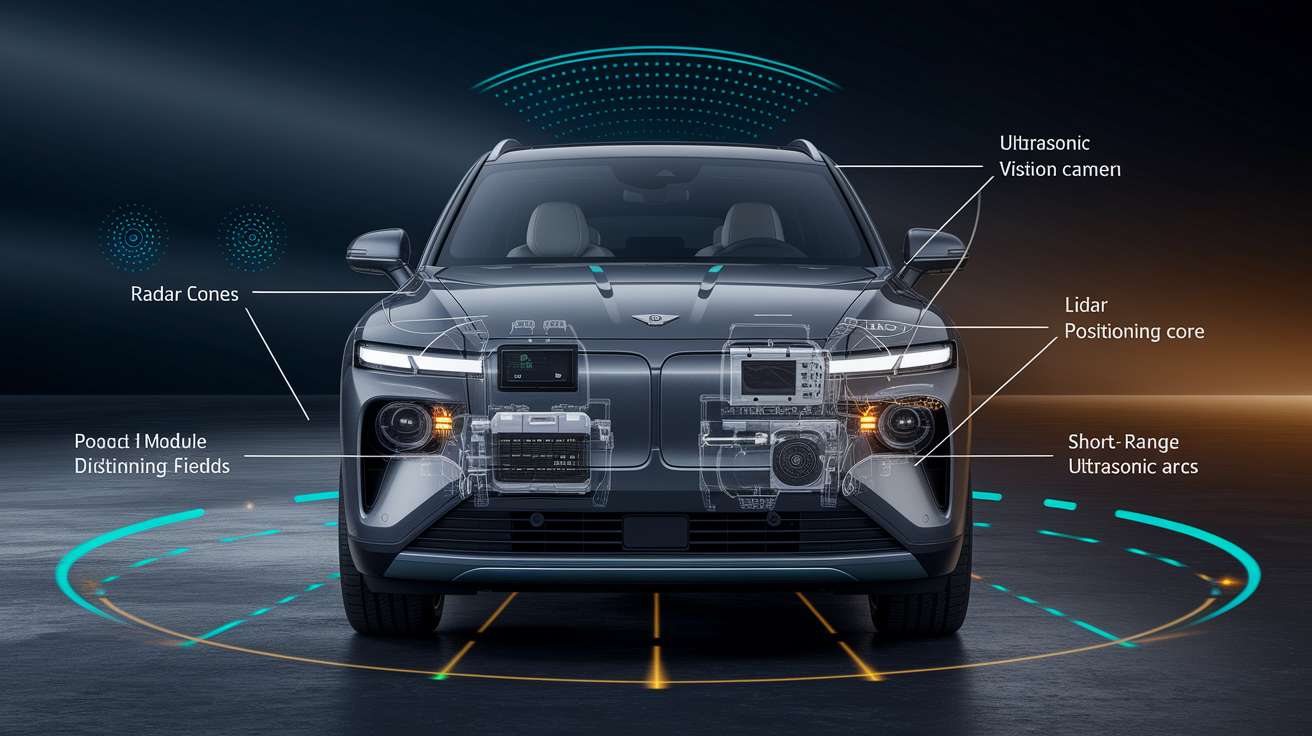
Sensor setups vary quite a bit from one vehicle to the next. Most systems rely on a mix of complementary technologies, each covering a different distance range or handling a different detection task. No single sensor does everything, which is exactly why they work as a team.
Radar
Radar is usually mounted behind the front grille or bumper and works by bouncing signals off vehicles ahead. Most systems in ACC sensor types operate in the 76 to 81 GHz band, giving a detection range of roughly 150 to 250 meters and an angular resolution of about 3 to 10 degrees. This lets radar detection in ACC measure both distance and relative speed with solid reliability. Some vehicles pair a short range unit with a long range one to cover near and far traffic together. The weak spot? Radar isn’t great at telling what an object actually is, so it can lose certainty around unusually shaped or poorly positioned targets.
Cameras
Forward facing cameras sit near the windshield, typically covering 50 to 150 meters at 20 to 60 frames per second. Camera based object recognition handles the visual side of things, spotting vehicles, lane markings, and other visible road features. This is the sensor that actually “sees” rather than just measures. The catch is that glare, fog, heavy rain, dirt on the lens, or a poorly lit road can all chip away at its reliability.
Lidar
Where fitted, lidar adds a point cloud view of the road extending roughly 100 to 200 plus meters. Its role in speed adaptation comes from the precise 3D shape and location data it provides, which helps the system understand not just where something is, but what shape it is. It’s not standard on every vehicle, and like the other sensors, weather and surface contamination can interfere with its returns.
Supporting Sensors
GPS and IMU (inertial measurement unit) systems support positioning with an accuracy of about 1 to 3 meters, while ultrasonic sensors cover anything closer than 5 meters. These don’t replace the main forward facing sensors. They just fill in the gaps for short range awareness and location context.
| Sensor Type | Typical Range | Field of View or Coverage | Primary Function | Key Limitations |
|---|---|---|---|---|
| Radar | 150 to 250 m | Forward, angular resolution ~3 to 10 degrees | Distance and relative speed measurement | Weak object classification, reduced certainty on unusual targets |
| Camera | 50 to 150 m | Forward field of view | Object and lane marking recognition | Glare, fog, rain, dirt, and poor lighting |
| Lidar | 100 to 200+ m | Forward spatial coverage | Precise 3D shape and location detection | Model dependent availability, affected by weather and contamination |
| GPS/IMU and Ultrasonic | 1 to 3 m accuracy (GPS/IMU); under 5 m (ultrasonic) | Positioning and close range coverage | Supplemental positioning and short range sensing | Not a substitute for long range forward sensors |
How Does Adaptive Cruise Control Identify And Track A Vehicle Ahead?
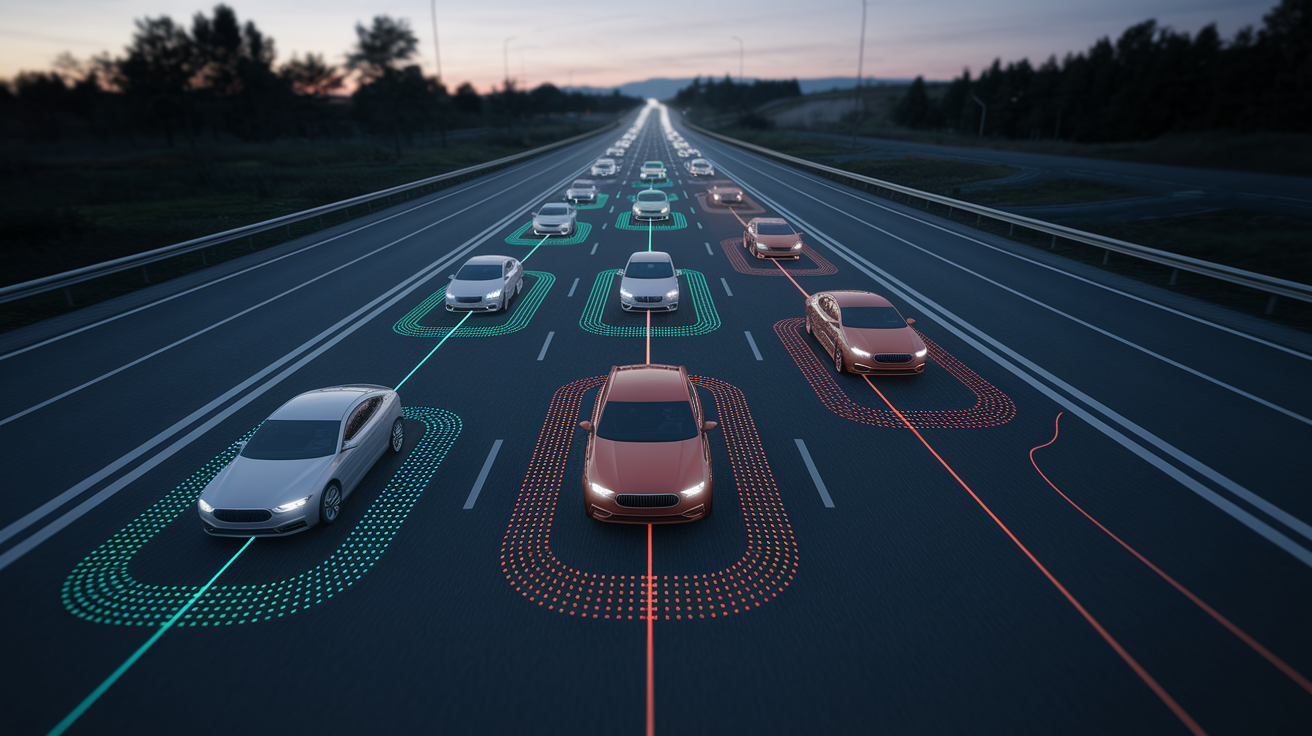
ACC doesn’t just look at raw sensor data and call it a day. It first has to figure out which observations belong to the same object. This is where sensor fusion algorithms come in, pulling together radar, camera, and (where available) lidar data into one consistent picture of what’s out there.
Once an object gets recognized as a distinct entity, the system runs object classification for ACC to sort it into categories like car, truck, motorcycle, or pedestrian. From there, vehicle tracking methods, often using Kalman filter tracking or similar approaches, smooth out noisy readings into stable estimates of position, relative speed, and short term trajectory. It’s a bit like taking a shaky video and stabilizing it so the motion actually makes sense.
With multiple vehicles in view, target selection logic decides which one actually matters. Typically, that’s the closest vehicle in your lane, especially one that’s closing the gap (negative relative speed). Multi target tracking strategies let the system switch targets quickly if another car cuts in front.
Final Words
In the action, adaptive cruise control scans the road, fuses radar, camera, and lidar observations, selects the lead vehicle, predicts its motion, and nudges throttle or brakes to hold your chosen gap.
This post covered the five-step operating cycle, sensor roles and limits, multi-target tracking and cut-ins, control strategies and stop-and-go behavior, and the weather and traffic cases that need driver attention.
For a quick next step, learn how adaptive cruise control detects and responds to traffic and check your car’s gap and stop-and-go settings. Used properly, ACC can make highway driving calmer and less tiring.
FAQ
Q: Does adaptive cruise control work in traffic?
A: Adaptive cruise control works in traffic by scanning ahead, selecting the lead vehicle, and adjusting throttle or brakes to keep your chosen gap; effectiveness depends on sensor conditions and traffic complexity.
Q: What should I be aware of when using adaptive cruise control?
A: When using adaptive cruise control, be aware you must supervise the road, expect reduced reliability in rain, fog, glare or dirty sensors, and know system braking, stop-and-go, and restart behaviors vary by vehicle.
Q: What are the disadvantages of adaptive cruise control?
A: The disadvantages of adaptive cruise control include over-reliance causing delayed driver intervention, limited performance in bad weather or complex traffic, variable braking authority, occasional jerky speed changes, and system-specific feature gaps.
Q: Which car has the best adaptive cruise control for stop-and-go traffic?
A: No single car has the universally best adaptive cruise control for stop-and-go traffic; choose models offering full stop-and-go, automatic restart, strong braking authority, and reliable sensors, and validate performance in a real drive test.