Reviews
Automatic Emergency Braking Systems: Smart Sensors Prevent Crashes
By ai
July 13, 2026
Field Notes

What if your car could hit the brakes faster than you can blink?
That’s what automatic emergency braking (AEB) does: smart sensors watch the road and brake when a crash looks imminent.
Radar, cameras, sometimes lidar and ultrasonics feed a central computer that fuses the data, predicts time-to-collision, warns you, pre-charges the brakes, then applies them if you don’t react.
We’ll break down each sensor, the decision logic, the timing, and the common limits so you know what AEB will actually stop—and when you still need to steer or brake yourself.
AEB Explained: The Core Process Behind Automatic Emergency Braking
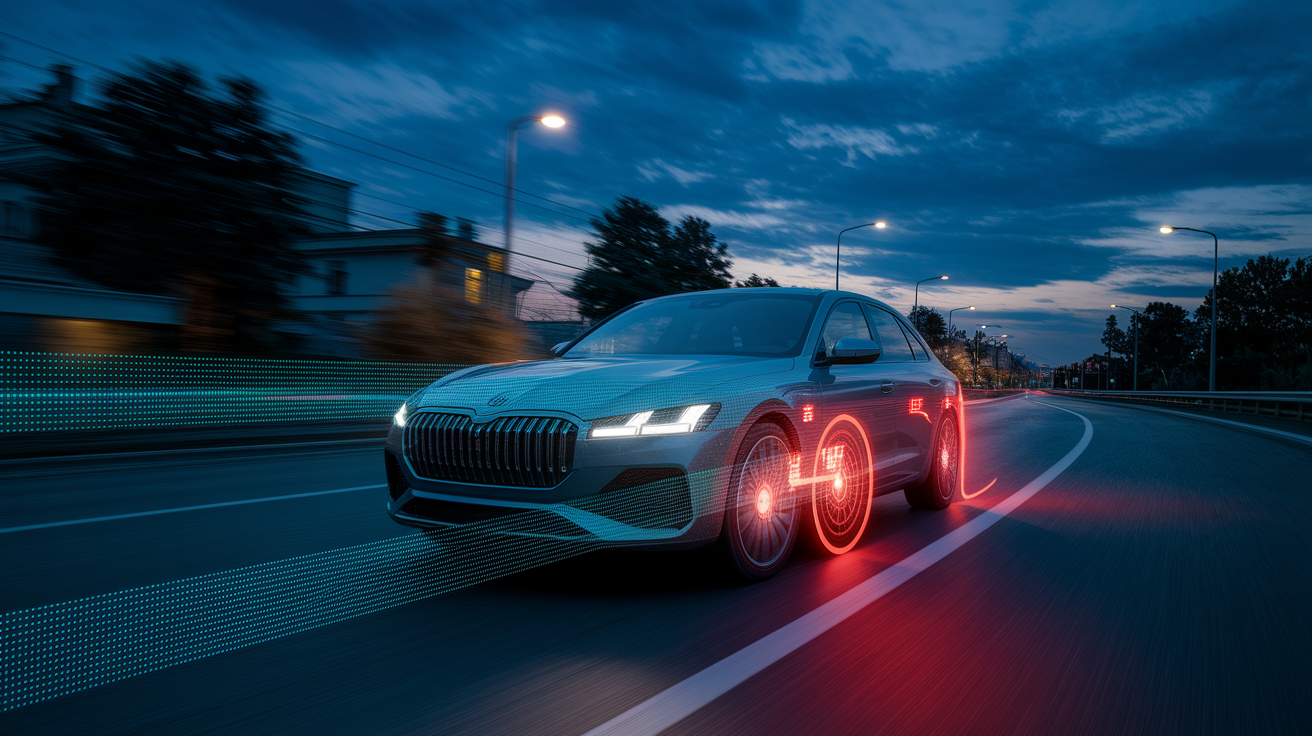
Automatic emergency braking (AEB) is a safety feature that watches the road ahead and hits the brakes on its own when a crash looks likely and you haven’t reacted in time. It doesn’t replace your driving. Think of it as a backup system, one built to catch the moments when your reaction time runs out.
So how does automatic emergency braking actually work? Here’s the short version. Sensors like radar and cameras constantly scan the road, feeding data into a central computer called an ECU (electronic control unit). That ECU fuses the information together (this is sensor fusion, combining multiple data streams into one clear picture) to figure out what’s ahead, how fast it’s closing in, and whether a collision is coming. This braking decision logic sits at the heart of every AEB system. Once the system calculates time-to-collision (TTC), meaning how many seconds remain before impact at the current closing speed, it moves through a staged response. First it warns you. If you don’t act, it pre-charges the brakes to remove slack. And if the danger stays imminent, it brakes for you, starting light and escalating to full force if needed.
Here’s the detection-to-braking sequence most systems follow:
- Continuous sensing. Radar and cameras scan the road ahead nonstop.
- Object detection and classification. The system figures out what’s out there, car, pedestrian, cyclist, or fixed object.
- Tracking and TTC calculation. The ECU tracks movement and predicts how soon a collision could happen.
- Driver warning. Visual, audible, or haptic alerts fire to grab your attention.
- Brake pre-charge. Hydraulic pressure builds in advance so the braking response is instant if needed.
- Automatic partial or full braking. The system applies the brakes itself if you haven’t responded.
Sensor-to-decision latency (the time between spotting a hazard and deciding what to do about it) typically runs 10 to 200 milliseconds. Add brake application, and the whole detection-to-brake response usually lands within 100 to 300 milliseconds. That’s faster than most drivers can blink and react. Below, we’ll break down each sensor, each stage, and each decision point in more detail.
What Sensors Do Automatic Emergency Braking Systems Use?
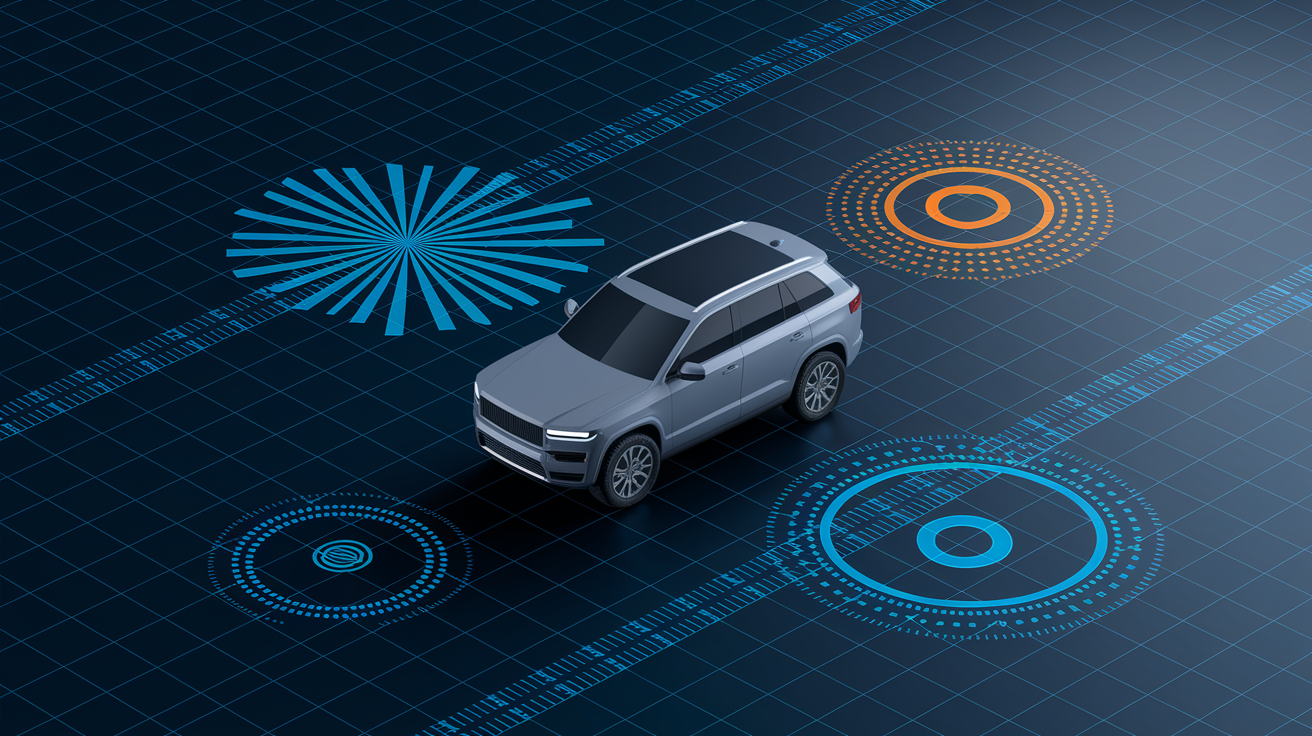
No single sensor gives AEB the full picture. Radar’s great at judging distance and speed but can’t tell a plastic bag from a pedestrian. Cameras excel at identifying what an object is but struggle in poor light. That’s why sensors in AEB systems typically work as a team, each one covering the other’s blind spots.
Radar Sensors
Radar sensors for AEB operate on 24 GHz or 77 GHz frequency bands, with 77 GHz being the modern standard for better resolution. They detect objects at ranges of roughly 30 to 250 meters and measure both distance and relative speed accurately, regardless of darkness, glare, or most weather conditions. What radar can’t do well is classify what it’s looking at. It knows something’s there and how fast it’s moving, but not whether it’s a car, a sign, or a shopping cart.
Camera Sensors
Camera-based AEB components handle the identification work. Mono or stereo cameras capture 20 to 60 frames per second and can classify objects, vehicles, pedestrians, cyclists, lane markings, at ranges of about 20 to 150 meters. The catch? Cameras depend on visibility. Fog, heavy rain, direct sun glare, or even a dirty lens can reduce reliability fast.
Lidar Sensors
Lidar adds a layer of precision most systems don’t have. Using laser pulses to map surroundings, lidar offers higher angular resolution than radar at ranges of 50 to 200 meters, which helps distinguish closely spaced objects. You’ll mostly find it in premium systems, and that’s down to cost, not performance.
Ultrasonic Sensors
Ultrasonic sensors in low-speed AEB cover the short stuff, typically under 5 meters. These are the sensors behind reverse braking and parking assist, built for slow-speed precision rather than highway detection.
Sensor placement and field of view matter too. Most vehicles run 1 to 3 radar units and 1 to 2 forward-facing cameras, positioned to maximize overlap in the zone right ahead of the car.
| Sensor Type | Typical Range | Best Use Case |
|---|---|---|
| Radar | 30–250 m | Distance and speed measurement in all lighting/weather |
| Camera | 20–150 m | Object classification and lane detection |
| Lidar | 50–200 m | High-resolution object separation, premium systems |
| Ultrasonic | Under 5 m | Low-speed and reverse maneuvers |
How Does an AEB System Detect and Classify Objects?
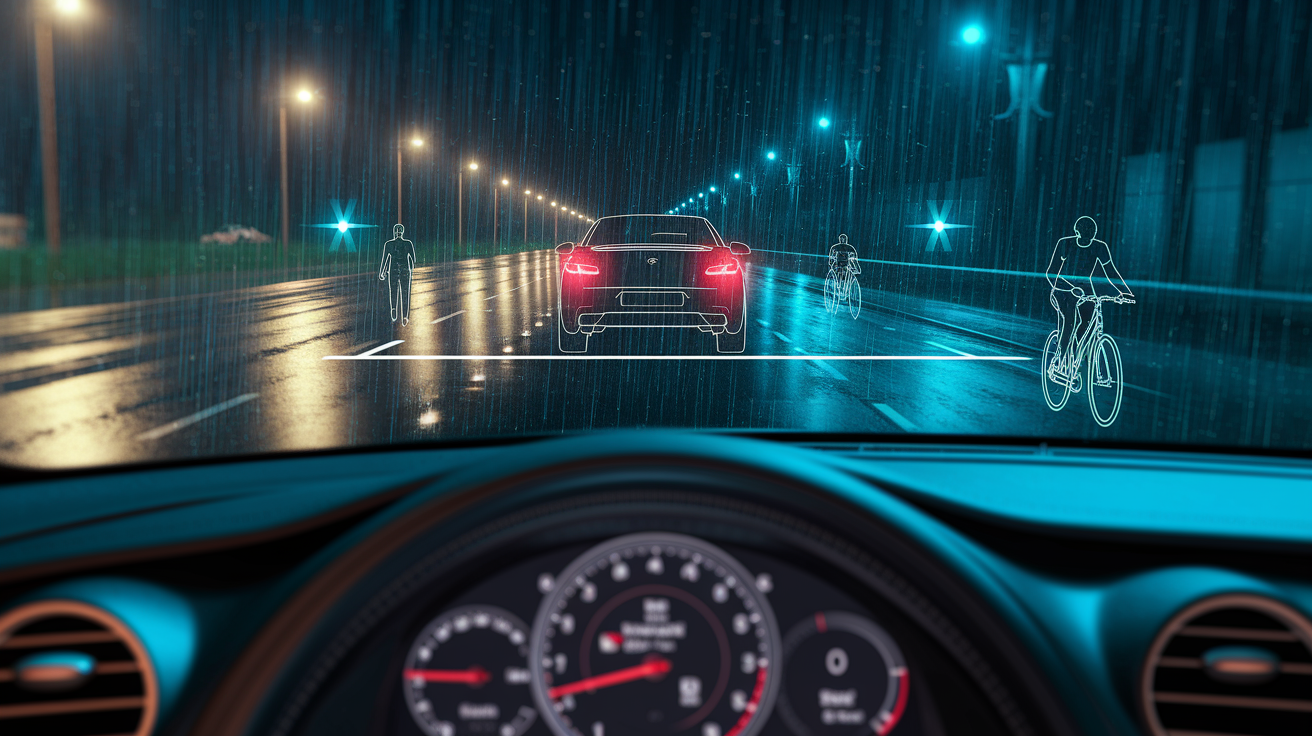
Detection starts with raw data, radar pings and camera frames, but the real work happens once that data gets combined and interpreted. Object detection algorithms process camera footage using a mix of classical computer vision techniques and neural networks (machine learning for object classification), sorting what’s ahead into categories like vehicle, pedestrian, cyclist, or static obstacle. Radar contributes speed and distance data for those same targets. The ECU fuses both streams, then tracks each object over time using filtering methods like the Kalman filter, a mathematical tool that smooths out noisy sensor readings to predict where an object’s heading next.
Pedestrian detection and cyclist detection are where things get harder. Pedestrian systems work best under about 30 to 40 mph and lose reliability at night, when contrast and visibility drop.
Final Words
In the action: AEB continuously senses the road with radar, camera, and sometimes lidar or ultrasonic sensors, fuses that data in an ECU, calculates time-to-collision, issues staged warnings, then pre-charges and applies partial or full braking if you don’t react.
You’ve seen the sensor roles, object classification, TTC thresholds, and the decision steps from sensing to braking.
Knowing how automatic emergency braking systems work helps you choose safer cars and feel more confident on the road.
FAQ
Q: How do automatic emergency brakes work?
A: Automatic emergency brakes work by continuously sensing the road with radar, cameras, and sometimes lidar, fusing that data in an ECU, issuing staged warnings, then pre-charging and applying partial or full braking if needed.
Q: Can AEB be turned off?
A: AEB can sometimes be turned off by the driver in many vehicles, but makers often restrict or default it on for safety, so check your owner’s manual or vehicle settings before disabling it.
Q: Which cars have AEB as standard?
A: Cars with AEB as standard include most new mainstream models and many luxury brands, so verify specific model years and trim levels on manufacturer spec sheets.
Q: What are some common problems with automatic braking systems?
A: Common problems with automatic braking systems include false braking from roadside clutter, missed detections in low light or bad weather, sensor blockage or misalignment, and software or calibration faults.