Guides
How to Troubleshoot Intermittent Electrical Outages Like a Pro
By cyber
June 16, 2026
Field Notes

Think a flicker is harmless?
It can be a warning of a loose neutral or service problem—and that can be dangerous.
Stop and check for smoke, burning smells, sparks, or water before you touch anything.
This guide shows you how to triage intermittent home power loss fast: gather the right details, spot patterns that tell you whether it’s a utility issue or a home wiring problem, and know exactly when to call the utility or a licensed electrician.
Follow these steps and avoid the common mistakes people make.
Safety-First Triage For Intermittent Power Loss
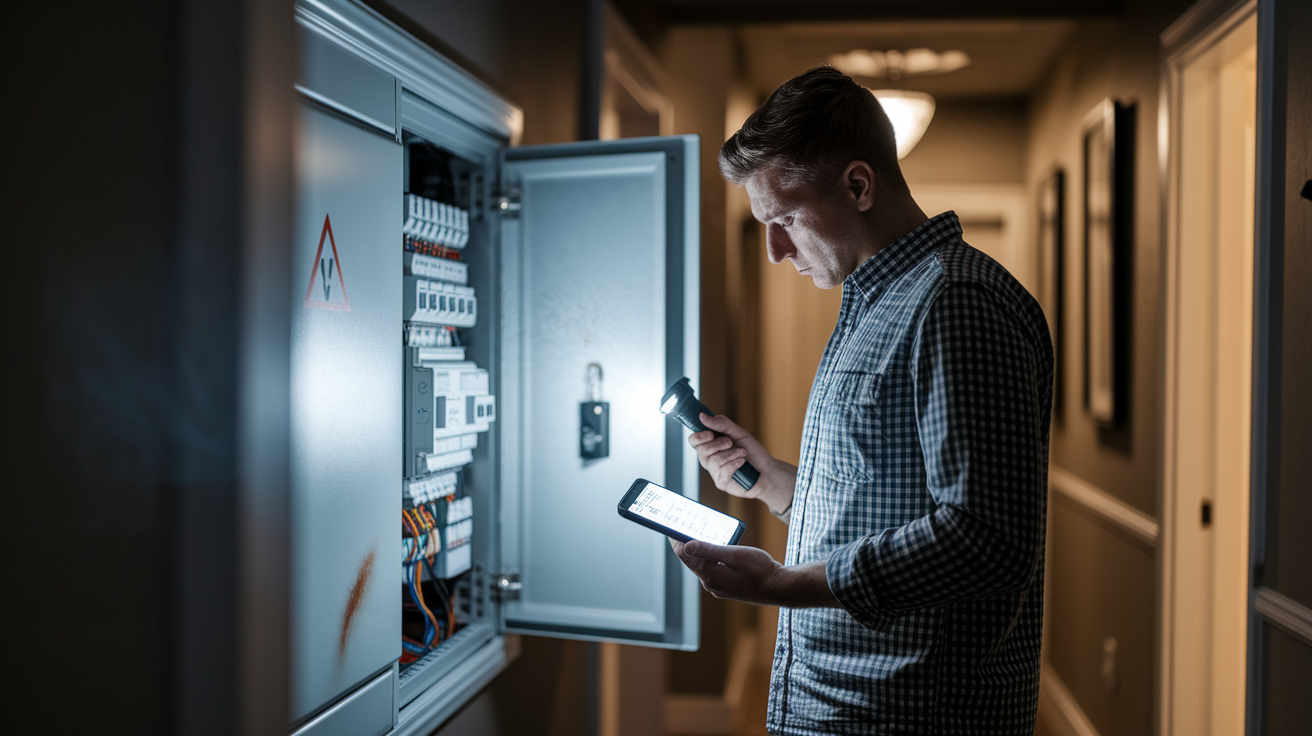
Stop. Before you touch a switch or peek inside the panel, check for the warning signs that mean this isn’t a DIY job. A burning smell, smoke, sparks, buzzing, unusual heat, scorch marks, or any water near the electrical panel means you call the utility company or a licensed electrician right now. No exceptions. Same goes for repeated breaker trips or that strange pattern where some lights get unusually bright while others dim. That last one can point to a dangerous condition at the service connection, not something you fix on a Saturday afternoon.
This section is about troubleshooting household power loss the safe way, gathering the right information before anyone opens a panel cover or touches wiring. You’re not diagnosing the exact fault yet. You’re sorting the problem into the right bucket: call the utility, call an electrician, or move on to the more detailed checks later in this guide.
You’ll need very little for this stage:
- A flashlight
- A phone, for jotting notes and checking the utility’s outage map
- A plug in outlet tester, only for a receptacle that’s dry, accessible, and undamaged, and only if none of the stop conditions above apply
Now walk through this sequence, in order.
-
Check whether your neighbours are affected. Look outside, or check the utility company’s outage map if you’ve got signal or Wi-Fi. This is the fastest way to tell a utility outage from a home issue.
-
Figure out if the outage hits the whole home or just certain rooms, lights, or outlets. Whole home loss points somewhere different than a single dead circuit.
-
From outside the closed panel, look for a breaker handle that’s visibly out of position, and check any accessible GFCI outlet for a tripped indicator. Don’t reset anything yet. That gets its own walkthrough later.
-
Think back. Was an HVAC unit, refrigerator, dryer, microwave, or space heater starting up or running when the power dropped?
-
Write it down. A quick worksheet helps a lot here:
- Date and exact time
- How long the outage lasted
- Whole home or just one circuit/room
- Which rooms, outlets, or devices were affected
- What was running right before it happened
If your neighbours lost power too, it’s a utility issue. Report it and wait. If it’s just your house, or just one part of it, the checks ahead will help narrow things down.
What Intermittent Outage Patterns May Indicate
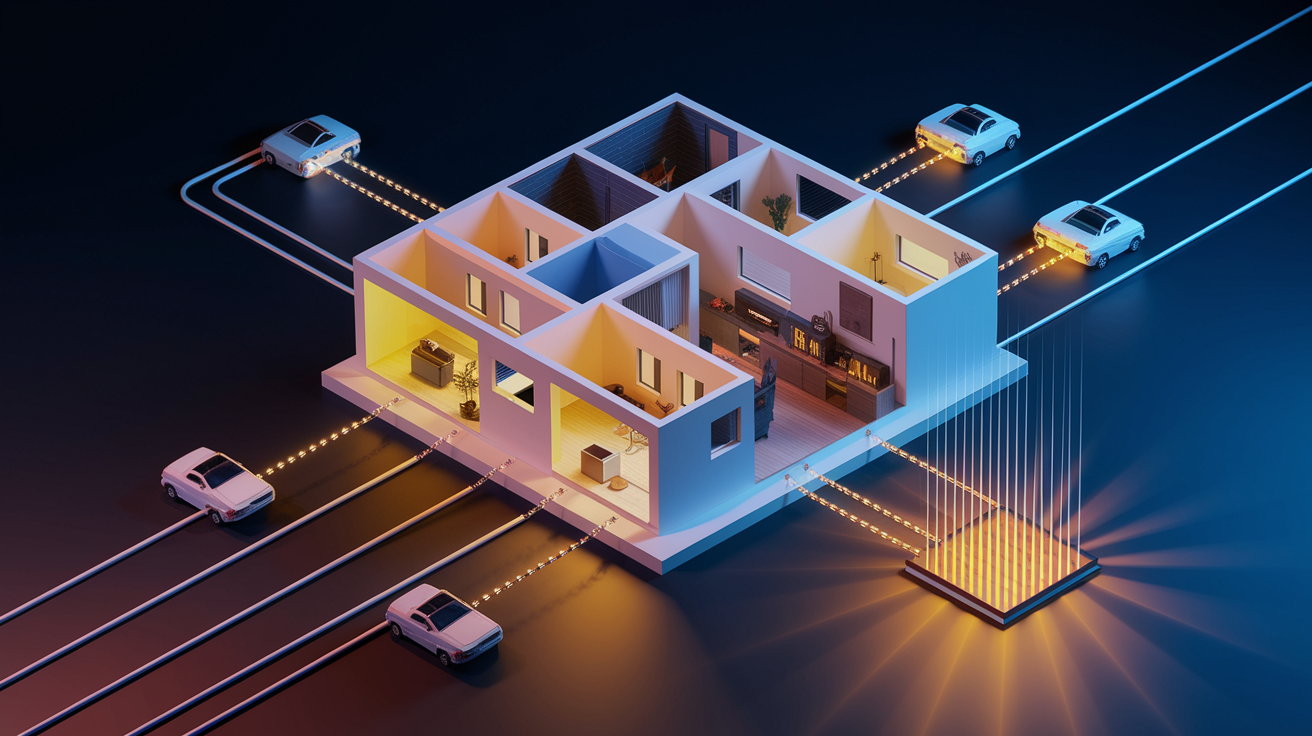
The pattern you just recorded is a clue, not a diagnosis. It narrows things down, but it can’t confirm a fault hiding inside a wall, a junction box, or the service equipment itself. That takes careful testing or a professional set of eyes.
Here’s how common patterns line up with likely causes.
| Observed Pattern | Likely Causes | Recommended Response |
|---|---|---|
| Several nearby homes lose power together | Utility network fault | Report to utility, wait for restoration |
| Entire home loses power | Utility service fault, main disconnect problem, or service conductor issue | Contact utility or licensed electrician |
| Half the home loses power | Lost service leg, main breaker issue, or loose service conductor | Call licensed electrician immediately |
| Some lights brighten while others dim | Possible loose neutral | Call utility or electrician right away, treat as urgent |
| One circuit drops out with high demand appliances running | Overload, weak breaker, or loose connection | Reduce load, monitor, call electrician if repeated |
| One receptacle, switch, or fixture fails intermittently | Defective device or local loose connection | Have an electrician inspect the device |
| Trouble during rain or damp conditions | Moisture intrusion or corrosion | Electrician inspection, do not test wet areas yourself |
| Interruptions tied to a standby generator | Generator or transfer switch fault | Have generator technician or electrician diagnose |
Appliances that cycle heavily, think HVAC units, refrigerators, dryers, microwaves, and space heaters, give you some of the best diagnostic clues around. When one of these starts up and the lights flicker or a circuit drops, it’s often exposing a loose connection or an overloaded circuit that was already borderline. The appliance isn’t necessarily broken. It’s just the thing that finally pushed a weak connection or a maxed out breaker over the edge.
Faulty switches, deteriorated wiring, pest damage, corrosion, and moisture in connections are all real possibilities too, especially in older homes. But recognizing the pattern isn’t the same as fixing it. Don’t open switches, don’t pull covers off receptacles, and don’t handle any conductor to “check” it yourself.
There’s a real difference in urgency here. A loose neutral or a lost service leg is dangerous and needs immediate attention from the utility or a licensed electrician. A single circuit tripping when the space heater kicks on? That’s a lower stakes problem, and you can dig into it a bit further using the steps ahead.
Circuit Breaker Troubleshooting And Panel Inspection
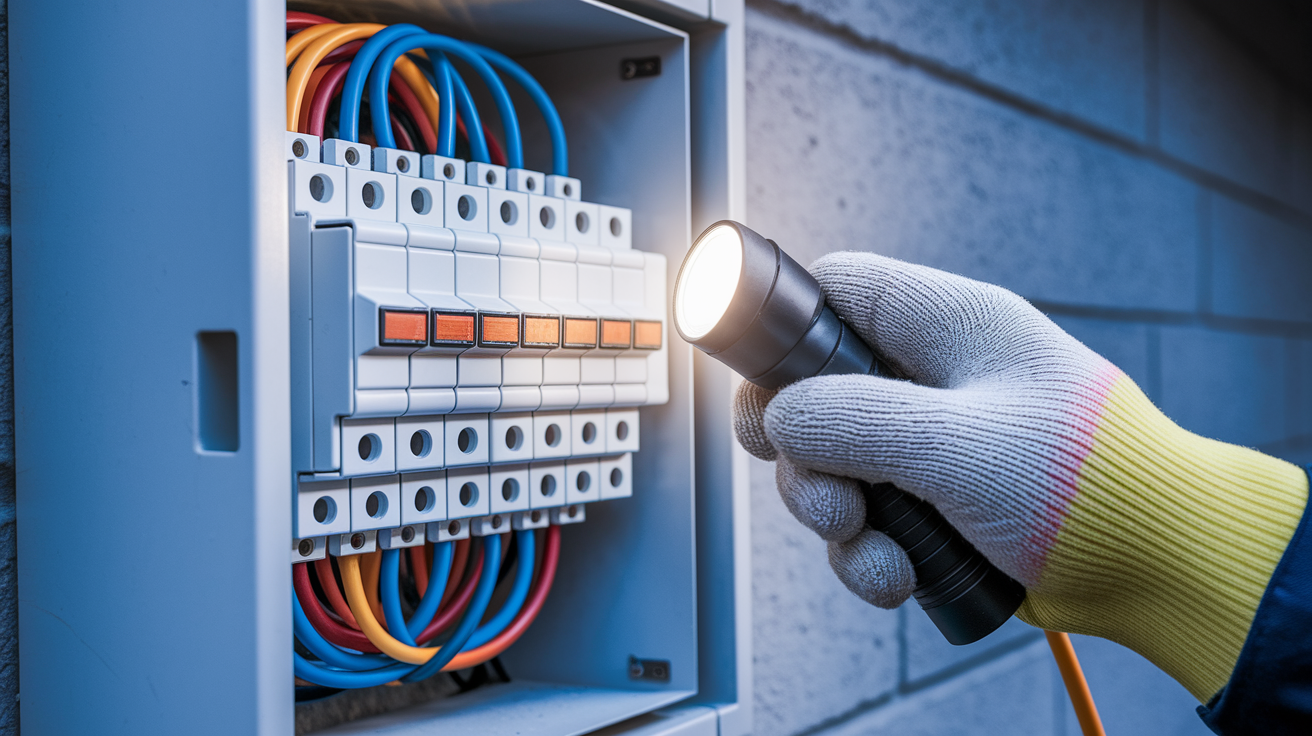
Before going any further, confirm none of the stop conditions from earlier apply. No burning odor, no smoke, no sparking, no buzzing, no heat, no scorching, no mo
Final Words
You ran the safety-first triage: stopped, observed without touching the panel, checked neighbours, and filled the quick worksheet.
Then you mapped patterns to likely causes and followed a limited, safe panel inspection plus the proper breaker-reset steps.
If you see burning smells, sparks, bright/dim lights, or repeated trips, stop and call the utility or a licensed electrician. For isolated circuit issues, use your notes to guide the technician.
With these steps and your diagnostic worksheet, you’ll know exactly how to troubleshoot intermittent electrical outages in a home, and stay safe while you do it.
FAQ
Q: Why did my power randomly go out and come back on, or why is half my house without power with no flipped breakers?
A: Random or partial outages—like power returning or half the house losing power with no tripped breakers—often mean a utility/service fault, a lost service leg, loose neutral, or failed breaker. If you smell burning, call the utility or an electrician.
Q: How can I troubleshoot electrical issues myself?
A: You can troubleshoot safely by checking neighbors or the utility outage map, noting whole-home versus circuit loss, inspecting the panel exterior only, unplugging loads, testing a dry outlet with a plug-in tester, and calling an electrician if unsure.
Q: How to stop fluctuating electricity?
A: To stop fluctuating electricity, power down suspect appliances, check if neighbours are affected, avoid touching the panel, and call the utility or a licensed electrician—fluctuations often mean a loose neutral, overloaded circuit, or faulty device.