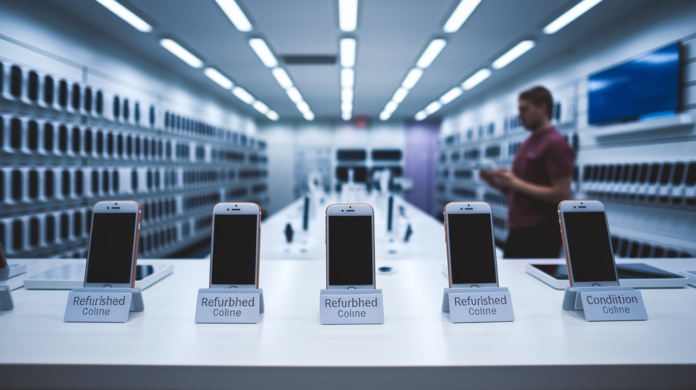

Think “refurbished” just means “used”—and you’re paying a dressed-up price?
That’s a common trap.
Refurbished devices are pre-owned or returned electronics that were inspected, fixed if needed, and tested for resale.
But the meaning shifts depending on who did the work: a manufacturer, a big retailer, or a small third-party shop can deliver very different results.
This guide explains the refurbished meaning in electronics, why it matters for quality and warranty, and the quick checks you should do before buying: check the source, the stated grade, and the warranty.
The Refurbished Label at a Glance

A refurbished phone, laptop, tablet, or other electronic device was previously owned or returned, then professionally prepared for resale instead of being sold in its original, unopened state. That’s the core of what refurbished actually means. It’s neither factory fresh nor a plain secondhand item handed off with no work done to it.
Behind that label sits a fairly simple idea. Before a refurbished device gets to you, someone’s put it through a process meant to check it, fix it, and get it ready for a new owner. What that process actually includes varies quite a bit, and we’ll get into that further down. For now, just know this: refurbished isn’t the same thing as “used as-is.”
Here’s where people get tripped up though. Not every refurbished device meets the same bar. Standards shift depending on who did the work. A manufacturer’s refurbishment programme, a retailer’s certified process, and a third-party seller’s take on “refurbished” can end up producing very different results, even when all three slap the same word on the listing. That difference matters more than the label itself. Worth understanding before you start comparing prices.
Refurbished vs Used vs New Electronics
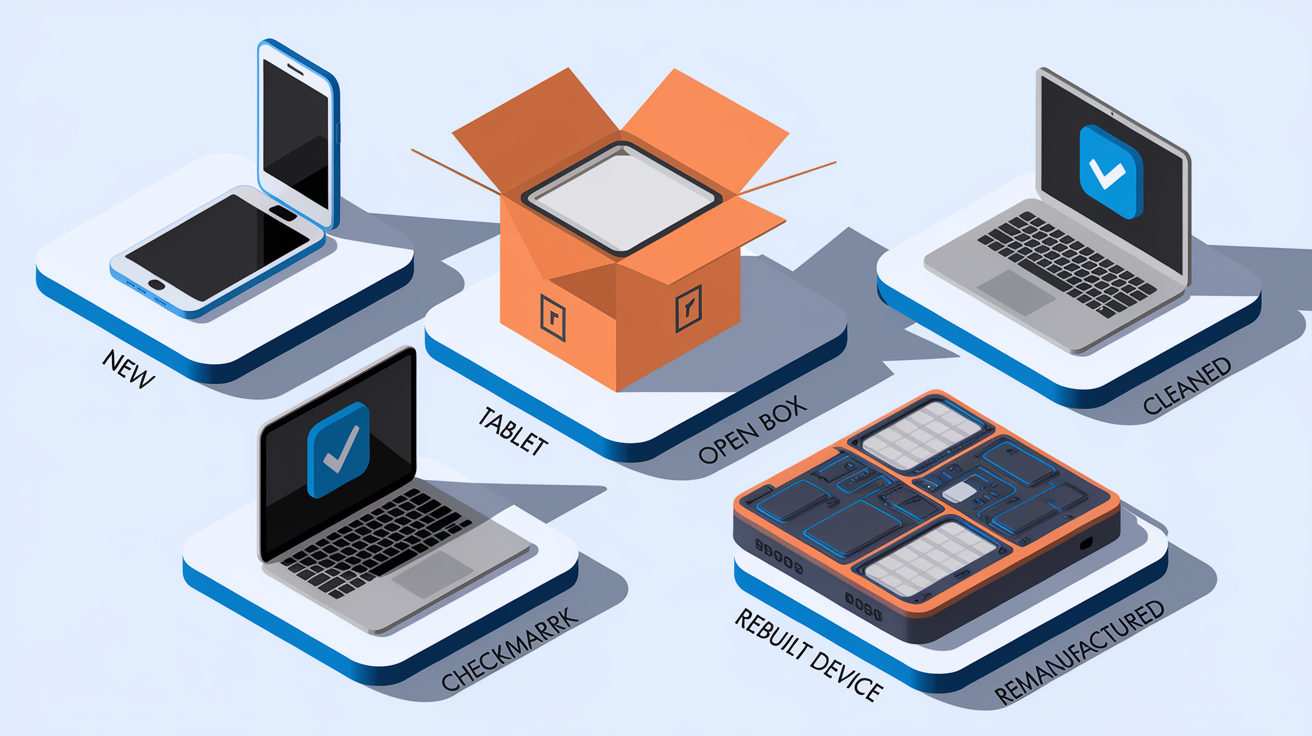
Condition labels aren’t just marketing fluff. They tell you what kind of wear to expect, roughly what you should be paying, whether accessories will likely be in the box, and what protections you’ve got if something goes wrong. Knowing the difference between new, open box, used, refurbished, and remanufactured electronics helps you avoid paying new device prices for something that was never really new to begin with.
Refurbished products, as we covered, go through a professional process before resale. We’ll walk through what that looks like step by step further down. For now, here’s how refurbished stacks up against its closest look alikes.
| Term | What It Means | Typical Condition |
|---|---|---|
| New | Never sold or used by a previous owner | Factory sealed, no wear |
| Open Box | Packaging was opened or damaged, item may be unused | Often unused, but not sealed |
| Used | Had a previous owner, sold in existing condition | Varies, no standard inspection |
| Refurbished | Professionally processed and prepared for resale | Varies by grade and provider |
| Remanufactured | Rebuilt to meet original specifications, often with new parts | Closer to factory new standard |
Remanufactured deserves its own callout. It’s not just cleaned up and tested. A remanufactured device gets rebuilt toward the original factory specs, often with new replacement parts, and that puts it in a different category from a typical refurbished unit. Refurbished products are restored for resale, sure, but that doesn’t mean they’re rebuilt to match factory specs exactly.
One more thing before you go comparing listings. “Renewed” shows up constantly on marketplaces, and people tend to use it interchangeably with “refurbished.” But the word alone won’t tell you the condition or quality of what you’re buying. Check the stated grade, the seller’s actual standards, and the warranty terms attached to the listing. Not just the label sitting at the top.
Who Performs Refurbishment: Manufacturer vs Third-Party

Who actually does the refurbishing changes a lot more than most people expect. It affects which parts get used, whether any certification applies, how strong the warranty is, and how consistent quality tends to be from one unit to the next. Here’s how the three main types compare.
Manufacturer Refurbished
When the original brand handles the work, either directly or through an authorised partner, that’s manufacturer refurbished. This route often uses original parts, which tends to put the final product closer to new condition than other refurbishment paths. Manufacturers know their own devices best too, so model-specific issues are more likely to get caught and actually fixed.
Warranty coverage usually comes with the deal, backed by the brand itself rather than some third party. That said, exact terms, warranty length, what’s covered, differ from one manufacturer’s programme to the next. Still worth reading the fine print instead of assuming every manufacturer refurbished listing works the same way.
Retailer or Certified Refurbished
Retailer-run programmes and official certification schemes operate against a stated set of eligibility rules and condition requirements. In plain terms, the retailer decides what qualifies as “certified” and applies that standard consistently across their listings. Warranty terms usually come with the purchase too, which is a real advantage over buying blind.
Here’s the catch though. A label like “certified refurbished” only means something if you can actually see the standards behind it. If a retailer can’t or won’t explain what their certification process involves, the label is doing more marketing work than quality work. Certifications like R2 and ISO 9001 (international standards covering things like responsible electronics recycling and quality management systems) can be useful signals that a provider has documented processes in place. They’re not a guarantee that any single product is flawless, but they do suggest the organisation takes quality control seriously.
Third-Party Refurbished
Independent refurbishers are the most inconsistent group, and not in a good way. Parts sourcing, testing rigor, warranty length, general accountability, all of it can swing wildly from one provider to the next. Some run tight operations with clear standards. Others cut corners you won’t discover until something breaks on you.
Before buying from a third-party refurbisher, check their reputation, look for disclosed standards or testing procedures, read the return policy closely, and confirm what warranty, if any, comes with the purchase. Skipping this step is where most refurbished buying regret comes from.
Step-By-Step Refurbishment Process
Exact procedures differ from one refurbis
Final Words
We defined refurbished devices for phones, laptops, tablets and other electronics, compared refurbished vs used/open-box/new, and showed who typically does the work.
You also got the full eight-step refurbishment workflow, a clear guide to Grade A–C cosmetic ratings, and practical tips for checking seller standards, warranties, and returns.
If you still wonder about refurbished meaning in electronics, remember it’s a previously owned device professionally prepared for resale and standards vary—check grade and warranty before buying. Do that and you’ll likely find a reliable device that fits your budget.
FAQ
Q: Is it okay to buy refurbished electronics — is refurbished good and worth it?
A: Buying refurbished electronics is a reasonable way to save money while getting a professionally processed device; check the seller’s grading, warranty, and return policy to ensure value and risk match your needs.
Q: Does refurbished mean it was broken?
A: Refurbished does not necessarily mean it was broken; it means the item was previously owned or returned and then professionally inspected, repaired if needed, and prepared for resale—standards vary by provider.